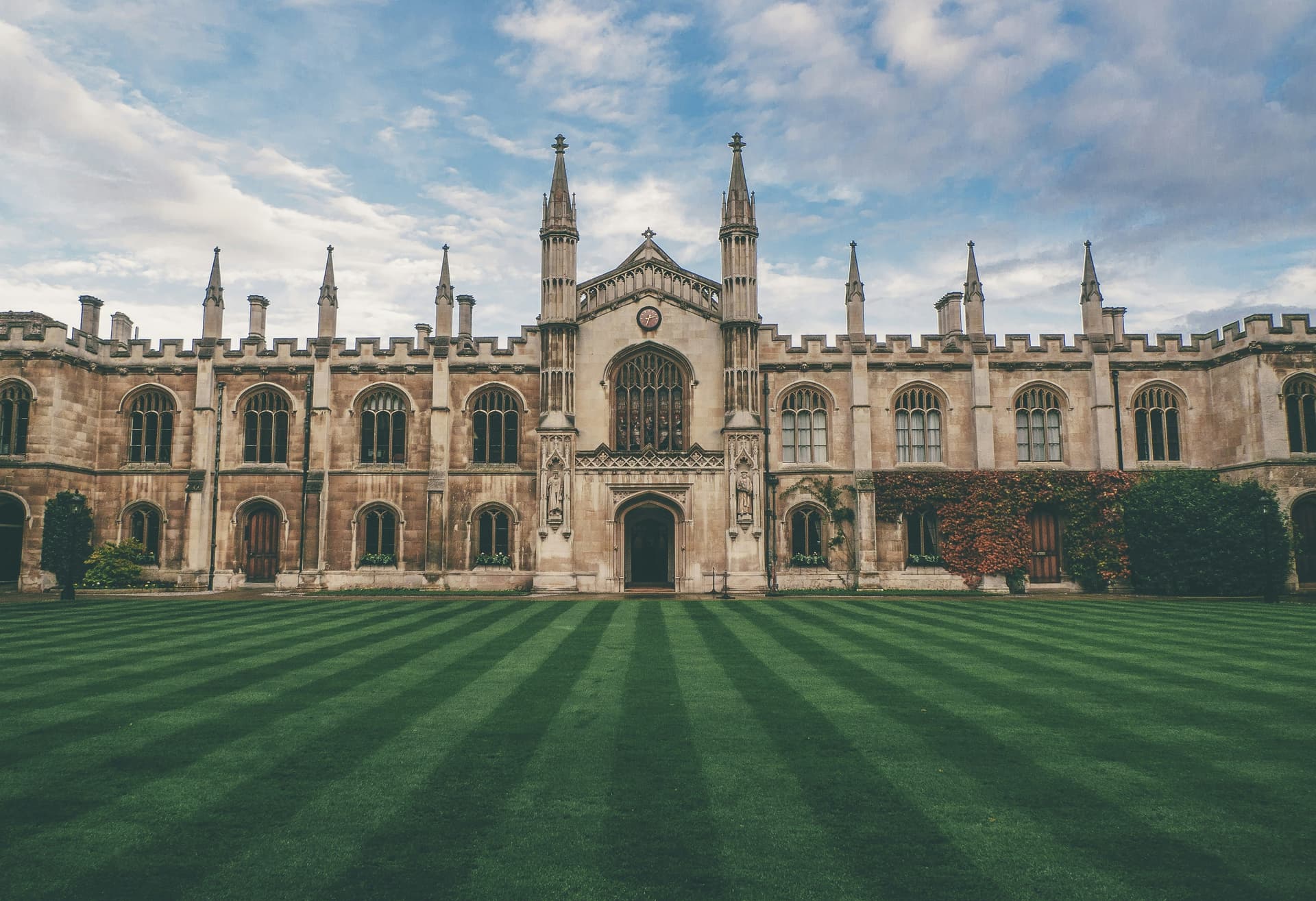
Is CCIR legit? Yes. The Cambridge Centre for International Research (CCIR) is an established online research program, founded by Cambridge graduates and based at Cambridge Science Park, that teaches high school students in groups of two to five (or one-on-one) with current faculty from Cambridge, Oxford, MIT, Harvard, Stanford and Ivy League universities. It is not part of the University of Cambridge, it does not publish tuition on its program pages, and it does not run its own journal: publication is a goal it supports, not a promise.
This review is written by a competitor, YRI Fellowship, and we say that upfront. Facts about CCIR come from CCIR's own pages and named third-party guides as of November 2026, all linked in the Sources section. Opinions are marked.
What CCIR is
CCIR describes itself as a group founded by Cambridge graduates. Its high school arm, CCIR Academy, runs online research programs, and the organization also runs a public lecture series, a podcast with admissions officers and the Re:Think Essay Competition, which CCIR says drew more than 4,200 submissions from over 50 countries in 2024. CCIR's site states plainly that it is not affiliated with the University of Cambridge or its colleges. The name and address are Cambridge; the program is independent.
CCIR Academy has three research programs:
- Cambridge Future Scholar Research Programme. A 13-week online course with 2 to 5 students per class, taught by a faculty mentor with a PhD teaching assistant. CCIR lists 173 course topics across STEM, business, social sciences and humanities, and an overall acceptance rate under 20%. It is designed for students in grades 11 and 12, though CCIR says younger students are sometimes admitted.
- 1-on-1 Research Mentorship. One student, one faculty mentor, one project. It typically runs 7 to 14 weeks, starts whenever the student wants, and includes 14 face-time hours with the mentor plus up to seven office hours on request. CCIR lists a 31% acceptance rate for this program.
- CCIR Pre-PhD Research Programme. A seven-month program, the longest and most expensive of the three.
Future Scholar runs in spring, summer and fall terms with early and regular deadlines; for Fall 2026 they were October 1 and October 15, 2026. A third-party listing reports a January 15, 2027 pre-application date for Spring 2027; check CCIR's page for the final dates. The 1-on-1 and Pre-PhD programs admit on a rolling basis all year. The Future Scholar application asks for a transcript and a personal statement of up to 500 words, and the 1-on-1 track adds an intake call, an interview with an academic adviser and a meeting with the matched mentor.
How the 13-week Future Scholar course works
The Future Scholar structure is closer to a small university seminar than to a typical mentorship:
| Weeks | What happens |
|---|---|
| 1 to 7 | One hour of lecture a week from the faculty mentor, one hour of seminar with a PhD teaching assistant, and a 30-minute office hour on request |
| 8 to 13 | A research methods session, then self-directed work; lectures become research workshops and TA sessions become writing sessions |
CCIR says the curriculum mirrors first-year courses at the mentors' universities, and that students should expect roughly 1 to 2 hours of live contact and about 4 hours of total work a week. Lectures and TA sessions are recorded. Students finish with an original research paper, a signed evaluation report from the mentor and a graduation certificate, and they can request a letter of recommendation. CCIR says it cannot guarantee a letter but that no student who has asked has been refused. Here is what makes a research recommendation letter strong.
Students whose project needs lab work can book the CCIR Lab in Boston, supervised by PhD-level lab managers, at no extra cost, a benefit CCIR says it opened to all students from Spring 2025.
What CCIR costs
CCIR does not print tuition on its program pages. It sends families to its prospectus, which has a "Tuition and Scholarship" section. Here is what we could verify:
| Item | Figure | Source |
|---|---|---|
| Pre-PhD Programme, full tuition | £5,550 / US$6,950 for seven months | CCIR's Pre-PhD page |
| Future Scholar deposit | $600 (reported as £500 / $600, refundable) | CCIR payment page; Borderless |
| Future Scholar tuition line labeled "250 USD Scholarship + 1000 USD FA" | $2,650 after that scholarship and aid | CCIR payment page |
| Future Scholar, 2026 | Reported at US$4,550 (£3,600) | RISE Research comparison |
| 1-on-1 Research Mentorship | Reported at $6,250 | RISE Research comparison |
| Older listing | Future Scholar $2,000, 1-on-1 $3,500 | AtomicMind (appears dated) |
Every applicant is automatically considered for merit scholarships, and families facing hardship can ask the admissions team for financial aid. CCIR's payment page offers PayPal installments over two months or six months, and a Pay Monthly option over 6 to 24 months at a fixed APR of 9.99% to 35.99% depending on credit. Read that last line twice before choosing it. Ask CCIR for the current fee in writing, since third-party figures vary widely. For the wider market, see how much research programs cost.
Does CCIR run a journal?
We looked, and we could not find one. CCIR's About page, FAQ and program pages do not name a journal that CCIR publishes. What CCIR does have:
- A publication database and journal guidance. Academic advisers help students pick venues, and CCIR says it steers students away from predatory pay-to-publish journals and from high school journals, aiming for "undergraduate or industry level" journals and conferences instead.
- A Student Research Symposium. Selected current and past CCIR students present at King's College, Cambridge. For 2026, abstracts of 200 to 400 words were due June 15 and the symposium ran July 30 to 31, with Nobel laureate keynotes. Abstracts are reviewed by the CCIR team and mentors, and there is no fee to present. The symposium page does not mention published proceedings.
- Named student outcomes. CCIR highlights a paper accepted to the 2021 IEEE MIT Undergraduate Research Technology Conference and a paper in Stanford's student journal Intersect. It also promotes a piece in Nature Nanotechnology by a CCIR alumna, which CCIR's own page describes as a personal account of her CCIR experience with reflections from her mentor, not a research paper.
CCIR's FAQ says publication happens "in certain cases." It does not publish a program-wide publication rate. If a paper in a journal is your main goal, that is the number to ask for, and our guide on how to publish a research paper in high school shows what that path involves. Our guide to journals that publish high school research explains how to check a venue yourself.
College credits
CCIR says students who complete the 1-on-1 Mentorship or Future Scholar can receive 10 UK government-recognised undergraduate credits at Level 4, which CCIR says equal 5 European credits or 2.5 US college credits, at no extra cost. The student must register within three weeks of the program start. CCIR is clear that each university decides whether to accept them.
Where CCIR is strong
- Faculty, not just graduate students. Mentors are current teaching faculty at Oxbridge and top US universities, supported by PhD teaching assistants. Few programs at this price offer that.
- Small, structured classes. Two to five students with a weekly lecture and seminar suits students who learn well with a syllabus and peers.
- Breadth. 173 course topics, including humanities and social sciences, which many STEM-first programs ignore.
- A stated stance against weak journals. CCIR openly discourages predatory and high school journals. That is the right advice.
- Extras at no added cost. Lab access in Boston, credits, an ethics review committee for human-subjects work, a writing centre staffed by Oxbridge students and alumni, and a symposium in Cambridge.
- Selectivity. Under 20% for Future Scholar and 31% for one-on-one, by CCIR's own numbers.
Where families should look closer
- Price is hard to pin down. Tuition lives in the prospectus, not on the page, and published figures range from $2,000 to $6,950 depending on the program and the year. Get the exact amount, the scholarship applied and the refund terms before paying the deposit.
- Contact hours are modest. Future Scholar is about 1 to 2 live hours a week, shared with up to four other students. The one-on-one track is 14 face-time hours in total. That is enough for a strong course paper; original research that goes through peer review often needs more contact, especially when reviewers send revisions after the program ends. Ask what support looks like in month four.
- Publication is optional, not designed in. There is no publication rate, and some of CCIR's headline outcomes are conference acceptances, student journals or a reflective article. Those can be worthwhile. They are not the same as a peer-reviewed research paper, so ask CCIR to show you named papers and their venues.
- The Cambridge name. Admissions readers know CCIR is independent of the University of Cambridge. The work has to stand on its own.
- Interest rates. The 6 to 24 month plan can cost up to 35.99% APR.
Opinion: none of this makes CCIR a poor program. It is a well-run, faculty-taught course that ends in a paper. The question is whether a course is what your child needs, or a research project with a finish line. Our checklist on how to tell if a research program is legit covers the questions to ask any provider.
How YRI compares, since you will ask
YRI Fellowship makes the opposite trade: one-on-one only, a fixed finish line. Each Fellow works 1:1 with a PhD mentor for 10 weeks toward a first-author paper submitted to a peer-reviewed IEEE, Springer or Elsevier venue, with ISEF and JSHS preparation included. It costs $2,997, with a 3-month payment plan and scholarships case by case, and mentorship continues at no extra cost until the paper is published. 87% of Fellows publish.
| CCIR Future Scholar | CCIR 1-on-1 | YRI Fellowship | |
|---|---|---|---|
| Price | Not published; reported at $4,550 | Not published; reported at $6,250 | $2,997 |
| Format | 2 to 5 students | One-on-one | One-on-one |
| Length | 13 weeks | 7 to 14 weeks | 10 weeks, then supported until published |
| Mentor | Current faculty plus PhD TA | Current faculty | PhD mentor |
| Designed outcome | Research paper; publication possible | Research paper; publication possible | First-author paper submitted to a peer-reviewed venue |
| Publication rate | Not published | Not published | 87% of Fellows publish |
| Competition prep | Not a stated feature | Not a stated feature | ISEF and JSHS included; 73% of Fellows place at competitions |
| College credit | 2.5 US credits (CCIR's equivalence) | 2.5 US credits (CCIR's equivalence) | None |
| Letter of recommendation | On request | On request | From the mentor |
If the paper, not the course, is the point, the YRI Fellowship is built around getting it submitted and published. You can compare more options in our ranked list of the best research programs for high school students.
Who should pick CCIR
- Your child wants a faculty-taught seminar with a syllabus and a few classmates.
- The interest is in humanities, social sciences or business, where CCIR's catalog is deep.
- UK credits or the Cambridge symposium matter to your plans.
- Your child needs lab access in Boston for an experimental project.
Who should pick YRI
- The goal is a first-author paper submitted to a peer-reviewed venue, as the default outcome.
- You want one-on-one time for the full program, not a shared lecture.
- You want ISEF and JSHS preparation included with the same project.
- You want support that continues until the paper is published, at one price.
Five questions to ask CCIR before paying
If a published paper is the goal, apply to the YRI Fellowship. Free to apply, about 10 minutes, rolling admissions.
Download the YRI Fellowship brochure
The program, the outcomes, the mentors and the tuition, in one PDF you can read with your family.
Related guides
- How to tell if a research program is legit
- Polygence review
- Lumiere Education review
- Indigo Research review
- Best research programs for high school students, ranked
- How much research programs cost
Frequently Asked Questions
Is CCIR legit?
Yes. CCIR is an established online research program founded by Cambridge graduates, with faculty mentors from Cambridge, Oxford, MIT, Harvard, Stanford and Ivy League universities. It is not affiliated with the University of Cambridge, which CCIR states on its own site.
How much does CCIR cost in 2027?
CCIR does not post tuition on its program pages. The Pre-PhD Programme is £5,550 / US$6,950 on CCIR's own page, a competitor reports 2026 Future Scholar tuition at US$4,550 and the 1-on-1 Mentorship at $6,250, and the Future Scholar deposit is $600. Confirm the current figure with CCIR in writing.
Is CCIR part of the University of Cambridge?
No. CCIR is an independent organization based at Cambridge Science Park. Many mentors teach at Cambridge and Oxford, but the program is not run by either university.
Does CCIR have its own journal?
We found no journal published by CCIR. It helps students target outside undergraduate and industry-level journals and conferences, and it runs a Student Research Symposium at King's College, Cambridge.
Does CCIR guarantee publication?
No. CCIR's FAQ says students are published or present at conferences "in certain cases," and it does not publish a publication rate.
How long is the CCIR Future Scholar program?
Thirteen weeks: seven weeks of lectures and seminars, then six weeks of research and writing, in a class of two to five students.
What is the CCIR acceptance rate?
CCIR lists under 20% for the Future Scholar program and 31% for the 1-on-1 Research Mentorship.
What is a good alternative to CCIR?
For a one-on-one, PhD-mentored paper with publication as the designed outcome, YRI Fellowship is $2,997 for 10 weeks, includes ISEF and JSHS preparation, and continues free until the paper is published; 87% of Fellows publish. Apply here.
Sources
- CCIR: homepage (programs, not affiliated with Cambridge, outcomes, deadlines)
- CCIR: About
- CCIR: Cambridge Future Scholar Research Programme (format, faculty, acceptance rate)
- CCIR: 1-on-1 Research Mentorship (hours, length, acceptance rate)
- CCIR: Pre-PhD Research Programme (tuition, publication aims)
- CCIR: Frequently asked questions
- CCIR: Accreditation and college credits
- CCIR: Student Research Symposium 2026
- CCIR: Nature Nanotechnology feature
- CCIR: Future Scholar tuition payment page (scholarship and aid line, payment plans)
- CCIR: Future Scholar deposit
- RISE Research: CCIR alternative (reported 2026 tuition)
- Borderless: CCIR Future Scholar listing (deposit, Spring 2027 dates)
- AtomicMind: CCIR Academy listing (older prices, application requirements)