From Karachi, Pakistan to the world's largest pre-college science competition—with research that could transform how the Global South participates in frontier astrophysics.
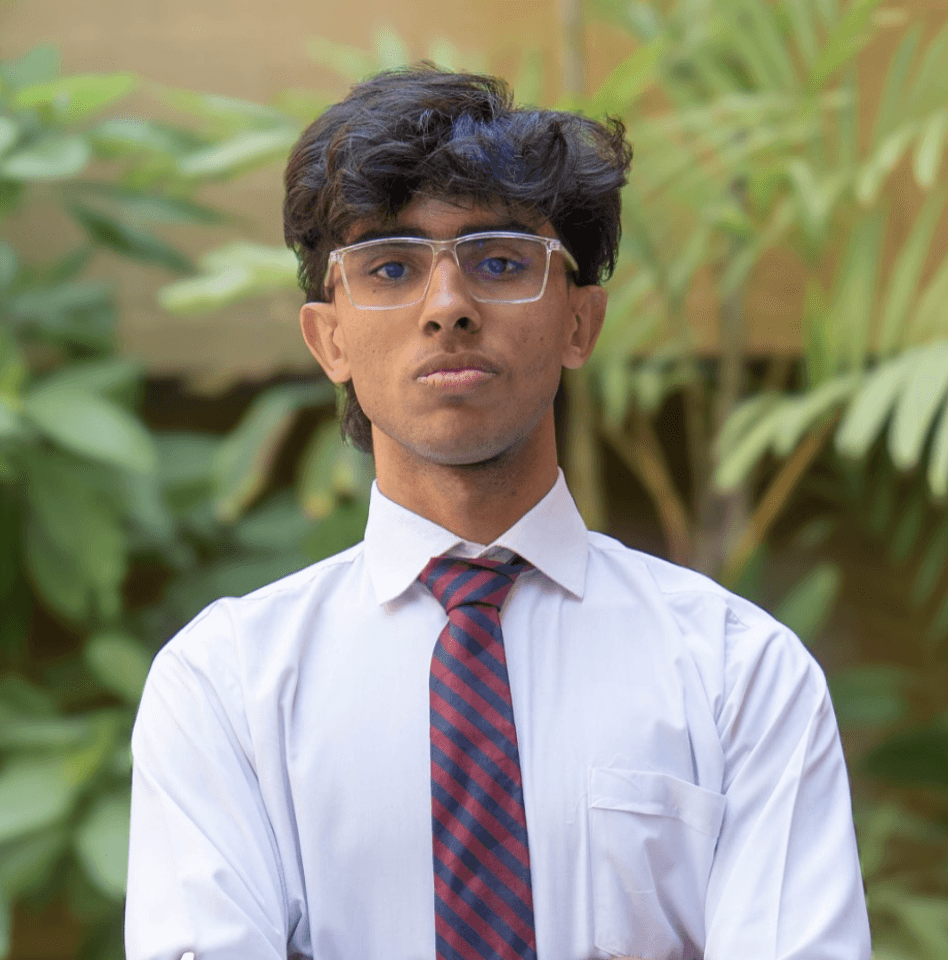
Mubashir Suhail, a student at Karachi Grammar School in Pakistan, has qualified as a finalist for the 2026 International Science and Engineering Fair (ISEF) with his research on low-resource gravitational-wave signal classification.
ISEF is the world's largest pre-college science competition, bringing together approximately 1,800 finalists from over 80 countries. Qualifying as a finalist places Mubashir among the top young researchers globally.
The Problem He Set Out to Solve
Gravitational-wave detection—identifying ripples in spacetime from cosmic events like black hole mergers—is one of the most exciting frontiers in modern physics. But there's a catch: the machine learning infrastructure needed to analyze this data typically costs $50,000+ per year, putting it out of reach for students and researchers in low-resource environments.
"I noticed that cutting-edge gravitational-wave research required expensive GPU clusters that most students don't have access to," Mubashir explained. "I wanted to find a way to make this kind of science accessible to anyone with a laptop and curiosity."
The Research
Working with his YRI mentor, Mubashir developed a novel solution: A Low-Resource Convolutional Neural Network Pipeline for Gravitational-Wave Signal Classification.
Key Innovations
- Lightweight CNN Architecture: Built a model with only ~92,000 parameters that can be trained on free Google Colab
- P2P Distributed Training Framework (P2P-DTF): A novel system enabling collaborative training across low-power devices
- 80× Gradient Compression: Allows training even on low-bandwidth internet connections
- Gossip-Based Synchronization: Enables efficient model updates across distributed devices
The breakthrough insight: 100 standard laptops working together can match the performance of a single NVIDIA V100 GPU—transforming computational inequality from an insurmountable barrier into a solvable engineering problem.
Technical Details
| Component | Specification |
|---|---|
| Dataset | G2Net Kaggle dataset (LIGO-Virgo detector strain data) |
| Model Size | ~92,000 parameters |
| Training Platform | Google Colab (free tier) |
| Distributed Capacity | 100 laptops × 150 GFLOPS = 15,000 GFLOPS |
Why This Matters
Mubashir's research isn't just academically interesting—it has real-world implications for scientific equity:
- $50K+ → $0: Annual infrastructure costs eliminated for participating institutions
- Global Access: Enables researchers worldwide to participate in gravitational-wave science
- Broadly Applicable: The P2P-DTF framework can be applied to any compute-intensive ML task
From Zero Research Experience to ISEF
Before joining the YRI Fellowship, Mubashir had no formal research experience. He had a deep interest in physics and machine learning, but no clear path to conducting original research.
Through YRI, he worked with a mentor who helped him:
- Refine his research question
- Work through complex signal processing challenges
- Develop the novel distributed computing framework
- Prepare for science fair competition
"My mentor helped me work through the signal processing and turn my idea into a real research paper," Mubashir shared. "Making it to ISEF with something I actually cared about was surreal."
What's Next
Mubashir will compete at ISEF 2026 in the Physics and Astronomy / Systems Software category, presenting his work to judges from academia and industry. His research demonstrates how high school students can contribute meaningful solutions to real scientific challenges.
The YRI Fellowship pairs high school students with PhD-level mentors to conduct original research, publish papers, and compete at top science fairs like ISEF. Learn more about the program or apply today.