Research helps you get into Caltech because Caltech asks for it directly: applicants can upload a full research paper, a letter from their research mentor and a Research Description Form, and about 42% of recently admitted students did. Research also gives you the strongest material for Caltech's STEM essays, which ask about questions you have pursued over time and problems you have worked through.
That does not mean research is required. Caltech says plainly that there is no prescribed way to get in and that you do not need scientific research to be admitted. But for a student who loves science, a finished research project is the clearest proof of the qualities Caltech says it looks for. This guide explains exactly where research fits in the Caltech application and how to present it well.
YRI Fellows have been admitted to Caltech, so this is a path we know. Here is what matters.
What Caltech Looks For
Caltech does not publish a checklist. Instead, its admissions site names three qualities it looks for in every applicant:
- Capacity for Caltech Rigor: readiness for the pace and depth of Caltech's academics.
- Scholarly Character: integrity, resilience and generosity in learning, including the ability to collaborate constructively with others.
- Scientific Drive: sustained pursuit of questions and discovery. Caltech notes that some students show this by conducting research, and it describes persistent curiosity about underlying principles as one sign of it.
Caltech also says high achievement alone is not enough, and that there is no single Caltech profile. It reviews your whole application in the context of the opportunities you had.
Faculty Read Applications
Caltech is unusual among U.S. universities: its faculty play what the school calls a pivotal role in selecting the first-year class, and every admitted student receives a positive review from a professor. That matters for research. A scientist reading your file can tell the difference between a student who ran a summer of busywork and a student who asked a question, built a method and wrote up results. A clear research paper speaks their language.
Research Is Part of Life at Caltech
Caltech's undergraduate research page says over 90% of Caltech undergraduates do research, and roughly half start in their first year. With a 3:1 student to faculty ratio and programs like the Summer Undergraduate Research Fellowship (SURF), students arrive and join labs quickly. An applicant who has already done research shows they are ready to contribute from the first term.
Where Research Goes in the Caltech Application
1. The Research Papers and Publications Upload
This is the most direct place. After you apply, Caltech gives you access to the Beaver Breakroom portal, where you can submit research. Caltech asks for three things:
- A full paper or publication. Caltech says a full research paper or publication is strongly preferred. If that is not possible, an abstract or poster can be submitted.
- An additional recommendation letter from the research site. The letter can come from a supervisor, mentor, adult collaborator or administrator, and it must speak to your specific contributions to the research.
- The Research Description Form, which asks how you got the experience, your role, the time frame, the topic and the paper's status.
The paper can be published, submitted or in preparation, and it can be in any field, not only your intended major. You may submit more than one paper. If several papers share the same mentor, one letter covers them.
Caltech defines this category fairly narrowly. Your work fits here if you worked with a lab at a university or research-affiliated organization, worked closely with or reported to a senior researcher in that lab, and produced a paper. Caltech also encourages, but does not require, an optional VIVA interview through InitialView to discuss your research.
2. The Portfolio
If your research does not meet the criteria above, Caltech asks you to submit it as a Portfolio instead. Caltech lists class projects, required coursework research, independent research and internships as examples that belong in the Portfolio. The Portfolio accepts documents up to 75 pages each, research posters, coding projects and more.
Caltech's advice here is worth repeating: a few carefully chosen submissions stand out more than a long pile of them. Caltech offers a short online quiz on its site to help you choose between the Research and Portfolio routes. Use it, and be honest about which one fits your project. Both are read.
3. The Supplemental Essays
Caltech's fall 2027 essays read almost like a prompt list for a student who has done research:
- STEM Academic Interest (150 to 200 words): which area of interest you would choose today and why.
- Scholarly Character (choose one, up to 200 words): a time your STEM learning was shaped by another person or group, or a time your approach to a STEM problem mattered as much as the outcome.
- Scientific Drive (choose two, up to 200 words each): a STEM "rabbit hole" you have fallen into, a STEM question or project that has held your attention over time, or something you created, tested, modeled, coded or built.
- Fun Question (100 to 150 words): something you would be excited to do, share, teach, make, start or contribute at Caltech.
- Optional Academic Short Answer: context about your academic preparation.
A research project can power several of these without repeating itself. The collaboration prompt is a natural home for what you learned working with your mentor. The process prompt fits the moment your first method failed and you had to rethink it. The "held your attention over time" prompt fits the question that started your project. Each answer shows a different side of the same work.
4. The Activities List and Letters
Your research should also appear in the Common App activities section, with concrete details: the question, your role, hours per week and the outcome. Strong entries name a result.
"First-author paper on graph neural networks for protein interaction prediction; accepted at an international computational biology conference; 8 hr/wk"
That is far more useful to a faculty reader than "Did research with a mentor."
How Research Strengthens a Caltech Application
It Proves Scientific Drive
Caltech wants sustained pursuit of questions. A research paper is sustained pursuit in written form: months of reading, testing and revising that ends in a finished argument. No other activity shows this as directly.
It Shows How You Think, Not Just What You Scored
Caltech requires the SAT or ACT for fall 2027 applicants and reviews section subscores instead of composites. Strong scores show you can handle the math. Research shows what you do with it when nobody hands you the problem.
It Gives the Faculty Reader Something to Evaluate
Because professors take part in the review, a well-written paper gives them something concrete to judge. They can see your methods, your reasoning and your writing in their own field.
It Brings in a Second Expert Voice
The research-site letter Caltech asks for adds a mentor who watched you work and can describe your specific contributions. That is a different view from your teachers, and Caltech asks for it on purpose.
What Kind of Research Fits Caltech
Research in STEM
Every Caltech essay is framed around STEM. Research in physics, chemistry, biology, computer science, mathematics, engineering, earth science or computational fields lines up with the application most directly. That said, Caltech accepts research in any field for the upload, so a strong project outside your intended major still counts.
Research You Can Explain Clearly
Faculty readers care about clarity. If you cannot explain your hypothesis, method and result in a few plain sentences, the paper will not help as much as it should. Practice explaining your project to a smart friend who is not in your field.
Research Where Your Role Is Clear
Caltech asks about your role on the form and asks your mentor to describe your specific contributions. A project where you owned the question, the code or the analysis is much stronger than one where you were a small part of a large team with no clear output.
Research That Reached an Outcome
Caltech accepts papers that are published, submitted or in preparation. A finished paper submitted to a peer-reviewed journal or conference is a far stronger signal than a project that stopped halfway. Our guide to publishing a research paper in high school explains how that process works.
A Caltech-Ready Example
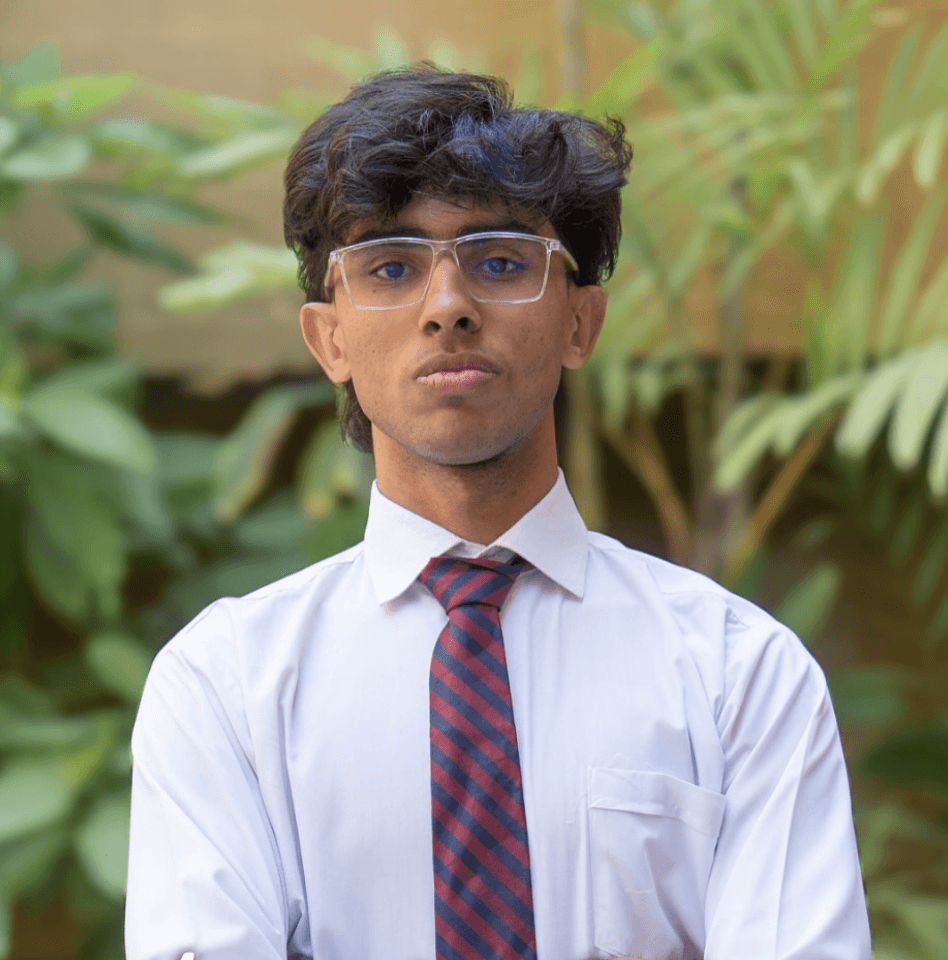
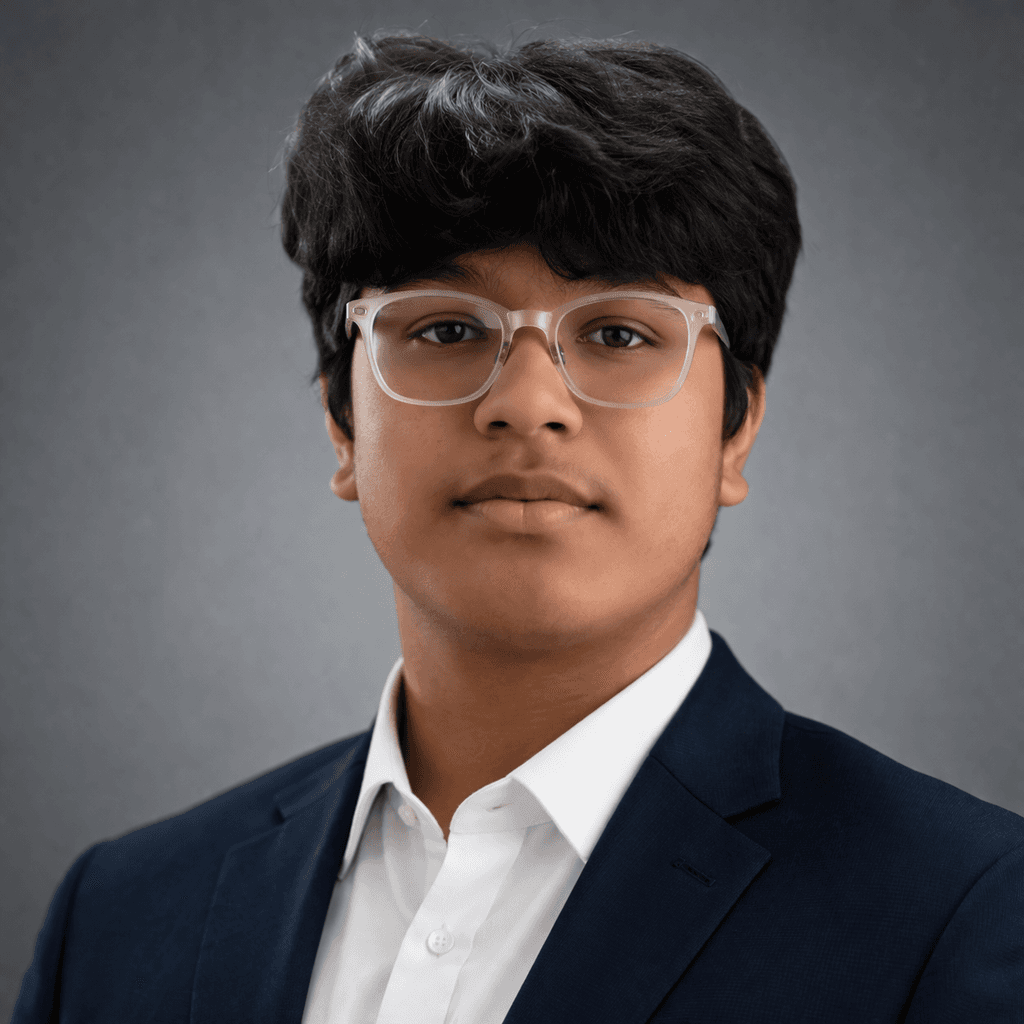
Here is what a strong research record looks like. Aaryan Senthilvanan, a YRI Fellow in computational biology, had three first-author papers accepted at ISMB, ACM-BCB and IWBBIO, three international conferences in three countries. One of them, InteractionFormer, uses equivariant graph neural networks to simulate the human interactome.
Look at how that record maps to Caltech's application. It gives the STEM interest essay a clear field. It gives the "held your attention over time" essay a question with depth. It gives a faculty reader papers to evaluate, and it comes with a mentor who can describe exactly what the student built. That is the shape to aim for.
Common Mistakes Caltech Applicants Make
Treating Research as a Checkbox
Caltech says research is not required. If your project exists only to fill a line on the application, it shows. Pick a question you want answered.
Submitting Through the Wrong Route
Independent research submitted as if it were lab research creates confusion. Read Caltech's criteria, take the quiz and submit through the route that matches what you did.
Writing Every Essay About the Same Detail
Caltech gives you several short essays. Use your research for two or three of them, each from a different angle, and use the others to show other parts of who you are.
Missing the Materials Deadline
For the fall 2027 cycle, Caltech's Restrictive Early Action application was due November 1, 2026, with supplemental materials due November 6. Regular Decision applications are due January 4, 2027, with materials due January 10. Research uploads count as supplemental materials, so plan ahead. If you are applying in a later cycle, check the deadlines page for updated dates.
A Timeline for Building Research Before You Apply
9th and 10th grade: Take the most challenging math and science you can. Read about the fields that pull you in. Start a small project.
10th grade summer or 11th grade: Begin a structured research project with a mentor. Aim for a finished paper, not just a summer of reading.
11th grade: Complete the paper, submit it to a journal or conference, and consider entering a science fair such as ISEF or JSHS.
Summer before 12th grade: Revise, respond to reviewer feedback and ask your mentor about a letter.
12th grade fall: Decide between the Research and Portfolio routes, write the STEM essays and upload materials on time.
For a broader view of how research reads in any application, see our guide to research for college applications.
Frequently Asked Questions
Do I need research to get into Caltech? No. Caltech says there is no prescribed way in and that you do not need scientific research to be admitted. About 42% of recently admitted students submitted research papers or publications, which means most admits did not. Research is one strong way to show Scientific Drive, not the only way.
Does my paper need to be published? No. Caltech accepts papers that are published, submitted or in preparation. A full paper is strongly preferred over an abstract or poster.
Who should write the research letter? Someone from the research site who can speak to your specific contributions: a supervisor, mentor, adult collaborator or administrator.
What if my research was independent or online? Caltech lists independent research as a Portfolio item. Submit it through the Portfolio, where Caltech still reviews it.
Is Caltech test optional? No. For fall 2027, Caltech requires the SAT or ACT and reviews section subscores rather than composites.
How the YRI Fellowship Helps Caltech Applicants
The YRI Fellowship is built to produce exactly the kind of work Caltech asks to read: a finished research paper with a mentor who can speak to your contribution.
- 1:1 PhD mentorship. You meet weekly with a PhD mentor in your field for 10 weeks, working 5 to 8 hours a week on your own question.
- A finished paper. An editing team works on every draft, and a publishing team helps get the paper into IEEE, Springer or Elsevier journals and conferences. 87% of Fellows publish (how we measure that), and help continues free until your paper is published.
- A mentor letter. Your mentor writes a letter of recommendation that speaks to your specific work.
- Competition prep. ISEF and JSHS preparation is included, and 73% of Fellows place at science competitions.
- No experience needed. You do not need prior research experience, and you get a decision within 48 hours of applying.
YRI Fellows have been admitted to Caltech, Stanford, Harvard, Brown and Johns Hopkins. The Fellowship is $2,997, or three payments of $999, with scholarships considered case by case. See pricing and read more student stories.
Related Guides
Sources
- Caltech Admissions: First-Year Applicants (no prescribed way in; research not required)
- Caltech Admissions: Research Papers and Publications (42% of recent admits, required components, criteria, VIVA)
- Caltech Admissions: Portfolio
- Caltech Admissions: Supplemental Application Essays (fall 2027 prompts and word limits)
- Caltech Admissions: What We Look For
- Caltech Admissions: Faculty and the Admissions Process
- Caltech Admissions: Standardized Tests
- Caltech Admissions: Deadlines
- Caltech Admissions: Undergraduate Research (over 90% participation, 3:1 ratio, SURF)
- YRI Case Study: Aaryan Senthilvanan
- YRI Fellowship program details
- YRI Fellowship pricing