Saudi high school students have three main research routes: Mawhiba and the Ministry of Education's national scientific creativity competition (Ibdaa), which selects the Kingdom's team for Regeneron ISEF, KAUST Academy's pre-university programs such as the Saudi Research Science Institute (SRSI), and online one-on-one mentorship that ends in a published paper. The national pipeline to ISEF is large and well organised, with the 2026 team chosen from more than 357,000 participants, and mentored research shows in the results: alumni of KAUST's SRSI alone have won 183 Grand Awards at Ibdaa.
This guide explains each route with official sources, who can access it, and how each helps with Saudi and international university applications.
The routes at a glance
| Route | Who it is for | Format | What you leave with |
|---|---|---|---|
| Ibdaa (Mawhiba and Ministry of Education) | Middle and high school students in Saudi Arabia | National research competition with several stages | Awards, and for top projects a place on the ISEF team |
| KAUST SRSI | Saudi national students in Grade 11 | Six weeks at KAUST | A research paper and poster with KAUST faculty |
| KAUST STEPs | Saudi students in Grade 10 | Six weeks at KAUST | University-level instruction, a path to SRSI |
| KAUST High School Summer Program | Saudi and international students in Grades 9 to 11 | STEM and research at KAUST, with placements at Oxford or Cambridge | Research experience, international exposure |
| Online one-on-one mentorship | Any student, any city, any curriculum | 10 weeks online with a PhD mentor | A first-author paper submitted to a peer-reviewed venue |
Ibdaa and the road to Regeneron ISEF
The National Olympiad for Scientific Creativity, known as Ibdaa, is run by the Ministry of Education and Mawhiba (the King Abdulaziz and his Companions Foundation for Giftedness and Creativity). It is open to middle and high school students in Saudi Arabia, who submit a scientific project in one of 22 areas the Kingdom has identified as national priorities. The best projects are nominated for Regeneron ISEF and other international competitions.
The scale is large. Ibdaa 2024 drew more than 210,000 students from 48 educational districts, and 35 qualified to represent Saudi Arabia at ISEF 2024. For ISEF 2026, the Saudi delegation of 40 students was chosen from more than 357,000 participants who submitted over 34,000 projects. Twenty-three competed in person in Phoenix and 17 remotely from Riyadh, and the team won 24 awards, including 12 Grand Awards. Mawhiba represents the Kingdom at ISEF together with the Ministry of Education, and Saudi participation began in 2007.
What families should know:
- Registration opens early in the school year. For Ibdaa 2025, registration ran from 24 August to 30 September 2024. Check Mawhiba's site each August for the current cycle's name, stages and dates.
- The final stages are a research competition. Winners of the national fair are invited to a qualifying workshop that selects the projects representing the Kingdom at ISEF. ISEF 2027 is May 8 to 14 in Los Angeles.
- A mentor makes the difference. Projects that win at this level have a clear question, a rigorous method, data and analysis, written up like a paper. Our guide on what makes a project ISEF-worthy explains the judging criteria.
KAUST Academy: SRSI, STEPs and the High School Summer Program
King Abdullah University of Science and Technology runs three main pre-university programs through KAUST Academy.
Saudi Research Science Institute (SRSI)
SRSI is for Saudi national students in Grade 11. It runs six weeks each summer: a two-day induction, four weeks of research with KAUST faculty teams, and a final week of presentations. Students receive lab safety and scientific writing training and produce a research paper and poster. KAUST reports that SRSI has served 720 students over 15 years, and that its alumni have won 183 Grand Awards at Ibdaa and 70 awards at ISEF. In summer 2026, 116 students took part.
The application fee is 200 SAR. For the last cycle, applications closed on 15 January 2026, so plan to apply early in Grade 11.
STEPs
The Science, Technology and Engineering Program (STEPs) is a six-week program for Saudi students in Grade 10, with instruction from KAUST researchers and graduate students. KAUST says students typically move on to SRSI the following year. In 2026, 104 students took part.
High School Summer Program (HSSP)
HSSP is a competitive program for Saudi and international students in Grades 9 to 11 that combines STEM learning and research at KAUST with academic placements at the University of Oxford or the University of Cambridge.
Best for: Students who want to work in KAUST's labs with university faculty, and who can commit six weeks in summer.
Keep in mind: Places are limited and SRSI and STEPs are for Saudi nationals. Students at international schools who are not Saudi nationals should look at HSSP or online options.
Research with a university professor
Faculty at Saudi universities sometimes supervise school students, usually after a direct request. If you write to a professor, mention one of their recent papers, explain what interests you and ask for a defined project. Our guide on how to email a professor about research has templates.
Online one-on-one mentorship with publication
For students who want a published paper, or a stronger Ibdaa project, without depending on a summer program's limited places, online mentorship is the route that works from Riyadh, Jeddah, Dammam or anywhere else.
The YRI Fellowship is fully online and open to students in 50+ countries. Each student works one-on-one with a PhD mentor for 10 weeks, 5 to 8 hours a week, in a field of their choice. Sessions are scheduled around the Saudi school week and time zone.
What is included:
- A 1:1 PhD mentor matched to the student's field, from 1,000+ PhD mentors.
- An editing team on every draft and a publishing team that takes the paper to IEEE, Springer or Elsevier journals and conferences.
- Free help until the paper is published.
- Competition preparation, including ISEF and JSHS, and a mentor letter of recommendation.
87% of Fellows publish and 73% place at science competitions. No research experience is needed.
A YRI Fellow from Riyadh
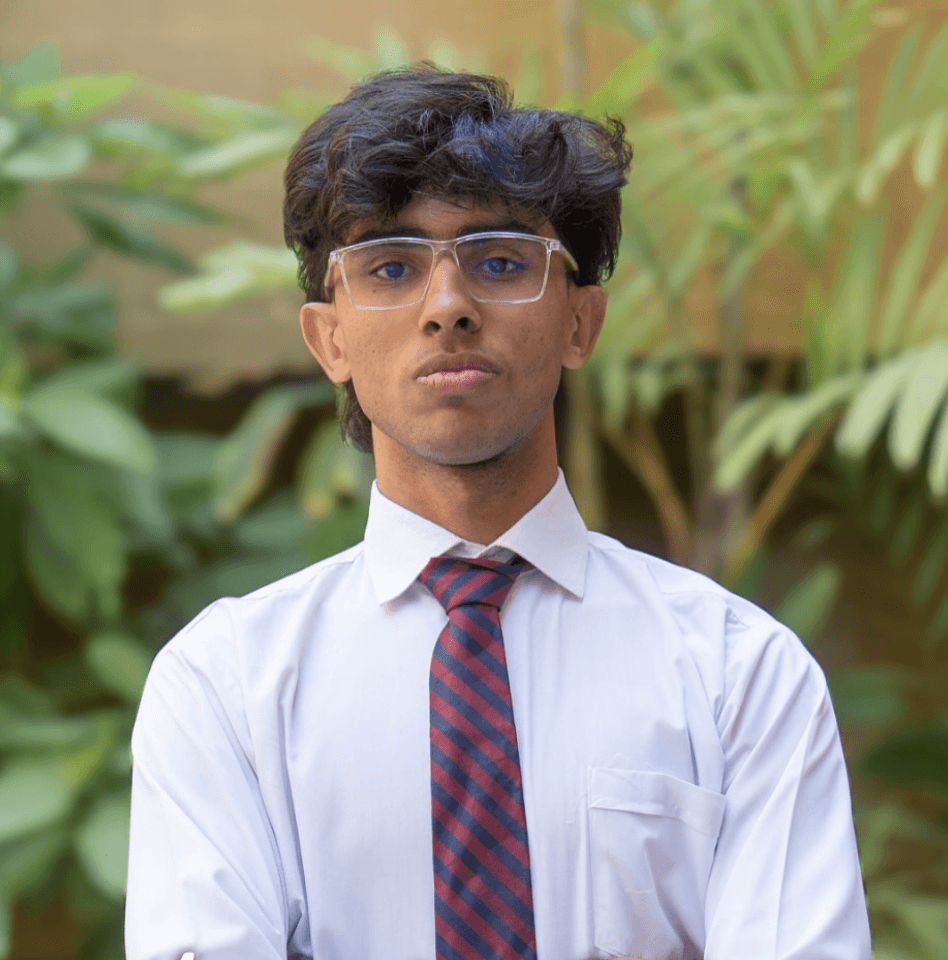
Mohammed Alnuwaiser joined YRI as an 11th grader in Riyadh with a strong interest in using AI to solve problems and no published research. With his mentor, he studied where validation checks should sit when language models plan missions for teams of drones, and how that placement affects both failure containment and compute cost. He is first author of the resulting paper, "Validation Placement in Static Multi-UAV Language Planning: A Paired Failure-Containment and Compute Study," accepted at an IEEE conference.
What universities look for
For Saudi universities and scholarships, Ibdaa results, KAUST program experience and published research all signal ability beyond grades, which matters for research-focused programs and competitive scholarships.
For US universities, a published paper or an ISEF award is one of the few credentials that reads the same across school systems. Admissions readers can verify it, and it gives the essays something concrete. Fellows have been admitted to Brown, Johns Hopkins, Stanford, Caltech and Harvard. How research papers get you into Ivy League schools explains how readers use it.
A timeline for Saudi students
- Grades 8 and 9: Enter Ibdaa early to learn the process. Start a mentored project.
- Grade 10: Apply to STEPs. Finish a first paper and take a stronger project into Ibdaa.
- Grade 11: Apply to SRSI or HSSP. Aim for the ISEF qualifying stage. Submit a paper.
- Grade 12: Present, publish, and list every result on your applications.
Frequently Asked Questions
How do Saudi students qualify for ISEF? Through Ibdaa, the national competition run by the Ministry of Education and Mawhiba. Top projects are nominated, and a qualifying workshop selects the team. For ISEF 2026, 40 students were chosen from more than 357,000 participants.
What is KAUST SRSI? A six-week summer research program at KAUST for Saudi national students in Grade 11, ending with a research paper and poster. The last cycle's application deadline was 15 January 2026.
Can international school students in Saudi Arabia join these programs? Ibdaa is open to students in Saudi Arabia, and KAUST's HSSP accepts international students. SRSI and STEPs are for Saudi nationals. Online mentorship has no nationality requirement.
Can a Saudi high school student publish a research paper? Yes. YRI Fellow Mohammed Alnuwaiser, an 11th grader in Riyadh, published a first-author IEEE conference paper. See more on the published work page.
How the YRI Fellowship helps Saudi students
If the goal is a first-author paper, a stronger Ibdaa or ISEF project and a standout university application, the YRI Fellowship is built for exactly that. One-on-one PhD mentorship for 10 weeks, an editing team on every draft, a publishing team for IEEE, Springer and Elsevier venues, competition preparation and free help until the paper is published.
Tuition is $2,997, or 3 payments of $999, with scholarships considered case by case. See pricing and apply to the YRI Fellowship. Decisions come within 48 hours.
Sources
- Mawhiba: Road to ISEF, registration opens for Ibdaa 2025 (organisers, eligibility, 22 areas, 2024 participation)
- Mawhiba: ISEF exhibition (qualifying workshop, participation since 2007)
- Arab News: Young Saudis win 24 awards at ISEF 2026
- KAUST Academy: Saudi Research Science Institute (eligibility, format, fee, alumni results)
- KAUST: KAUST Academy launches summer 2026 programs (SRSI, STEPs, HSSP)
- YRI case study: Mohammed Alnuwaiser
- YRI Fellowship: program details
- YRI Fellowship: pricing