The first author of a research paper is usually the person who did most of the work: they led the project, ran the analysis and wrote the draft. A co-author contributed meaningfully but did not lead. For a high school student, first authorship carries more weight with admissions readers and competition judges because it answers their biggest question at a glance: what did this student do?
This guide explains what author order means, how it differs by field, why it matters for college applications, how to earn first authorship honestly, and how to describe your role whatever your position on the byline.
What author order means
Every research paper lists its authors in an order, called the byline. What that order signals depends on the field.
In most experimental and applied fields, including much of biology, medicine, engineering and computer science, the first position goes to the person who did the most work on the project. That is usually the student or junior researcher who designed and ran the experiments and wrote the first draft. In many lab sciences, the senior researcher who led the lab or supervised the work often takes the last position. The names in between are co-authors who contributed in smaller ways.
In mathematics and some theoretical fields, the convention is different. The American Mathematical Society notes that mathematicians traditionally list co-authors alphabetically, because joint work usually involves a small number of people contributing equally. A student in pure math may be listed second simply because of their last name.
There is no single rule. The International Committee of Medical Journal Editors (ICMJE), which publishes authorship recommendations for medical journals, says the criteria for byline order may vary and are to be decided collectively by the author group, not by editors. That is why it is worth agreeing on order early.
Who counts as an author at all
Being on the byline is not a reward for being nearby. The ICMJE recommends that every author meet all four of these criteria:
People who helped but do not meet all four, for example by providing funding, general supervision or language editing alone, should be thanked in the acknowledgments instead. Publishers take this seriously. Springer's proceedings instructions say only individuals who can be held responsible for the contents may be named as authors, and once a paper is delivered to Springer Nature, authors cannot be added, removed or reordered.
First author vs co-author: the practical difference
| First author | Co-author | |
|---|---|---|
| Typical role | Led the project, did most of the work, wrote the draft | Contributed a part: data, analysis, a method, review |
| What readers assume | The student drove the research | The student helped on someone else's project |
| How easy to verify the student's role | Clear from the byline | Needs explanation |
| What the student can discuss in an interview | The whole project, every decision | Their slice of the project |
| Common setting for high schoolers | Mentored independent research | Volunteer or intern role in a university lab |
Neither is bad. A co-authorship from a summer in a university lab is a legitimate credential and a great experience. But the two signal different things, and admissions readers and judges know the difference.
Why first authorship matters for college admissions
It answers the question readers are trying to answer
Admissions readers want to understand what the student did. The Common App gives a student 150 characters to describe each activity, so there is little room to explain a complicated role. "First author, paper accepted at an IEEE conference" says it in one line. "Co-author (6th of 9)" invites the reader to wonder which part was theirs.
Mentor letters and supplements look at contribution
Some colleges ask about research directly. MIT's optional Research Supplement, for example, asks for a short questionnaire about the student's research, the abstract or poster (with a citation if published) and a recommendation from the research mentor. A mentor who can write that the student led the project, designed the method and wrote the paper is giving the strongest possible evidence. The byline and the letter should tell the same story.
Competitions judge independence
Science fairs care who did the work. Society for Science explains that it uses individual applications for team projects at its middle school competition because judges want to tell how each student contributed. At Regeneron ISEF, the interview is worth 25 of the rubric's 100 points, and judges probe how much of the project is the student's own. A first author can answer every "why" question. A co-author on a large project often cannot.
It is easy to check
A published paper can be looked up in seconds on IEEE Xplore, Springer Nature Link or the journal's site. The byline is right at the top. A student who claims to have "led" research but appears seventh on a twelve-author paper creates doubt. Honest descriptions that match the byline build trust.
Situations where co-authorship is the right outcome
- The student joined an existing lab project and contributed one part, such as data collection or one analysis. Co-authorship is fair and accurate.
- A team project with equal contributions. Some papers state that two authors contributed equally. That is legitimate, and the student can say so.
- Math and theory papers listed alphabetically.
- A first project. Contributing to someone else's research can be a great way to learn how research works before leading a project.
In each case, the right move is to describe the role precisely, not to inflate it.
How a high school student earns first authorship
First authorship is earned by doing the first author's job. In practice:
Red flags to watch for
- A program that offers first authorship without the student doing the writing
- A paper with a long list of student names where nobody can say who did what
- "Authorship" sold as an add-on, or a journal owned by the program itself
- A byline that cannot be changed later because nobody discussed it before submission
Is This Research Program Legit? covers what to ask before paying for any program.
How to describe your authorship on applications
- Activities list: state the role and the venue plainly, for example "First author, paper accepted at IEEE EMBC 2026" or "Co-author, data analysis for a published lab study."
- Status: be precise. Published, accepted, under review and submitted are different, and readers can check.
- Essays and interviews: describe the decision you made, the problem you hit and what you learned. That is more convincing than the byline alone.
- Mentor letter: ask your mentor to describe your specific contribution.
How to Get a Research Letter of Recommendation and Research in Common App Essays go deeper.
Frequently Asked Questions
What does first author mean on a research paper?
In most experimental and applied fields, the first author is the person who did most of the work, including running the research and writing the draft. In mathematics and some theoretical fields, authors are often listed alphabetically instead.
Is co-authorship still good for college applications?
Yes. A co-authorship on a legitimate paper shows a student contributed to research judged by experts. It carries less weight than first authorship because the student's role is less clear, so describe that role precisely.
Can a high school student be first author?
Yes. High school students are first authors on peer-reviewed papers every year, usually with a mentor who supervises the work while the student leads it.
Who decides the author order?
The authors decide together. ICMJE guidance says byline order is decided collectively by the author group, not by editors. Agree on it before the work starts.
Can the author order be changed after submission?
It depends on the venue, but it can be hard or impossible later. Springer's proceedings instructions say authors cannot be added, removed or reordered once the paper is delivered to Springer Nature.
Should a mentor be a co-author?
If the mentor meets the authorship criteria, they may be listed, often after the student. If they only supervised generally, they belong in the acknowledgments. Discuss this openly at the start.
How the YRI Fellowship helps students earn first authorship
At YRI, the student leads. Each Fellow works one-on-one with a PhD mentor every week for 10 weeks, choosing the question with the mentor, running the research and writing the manuscript with structured feedback. An editing team reviews every draft, and a publishing team gets the paper into IEEE, Springer or Elsevier journals and conferences, with free help until it is published. Every Fellow's paper lists the student as first author, and the mentor writes a letter of recommendation that can speak to exactly what the student did.
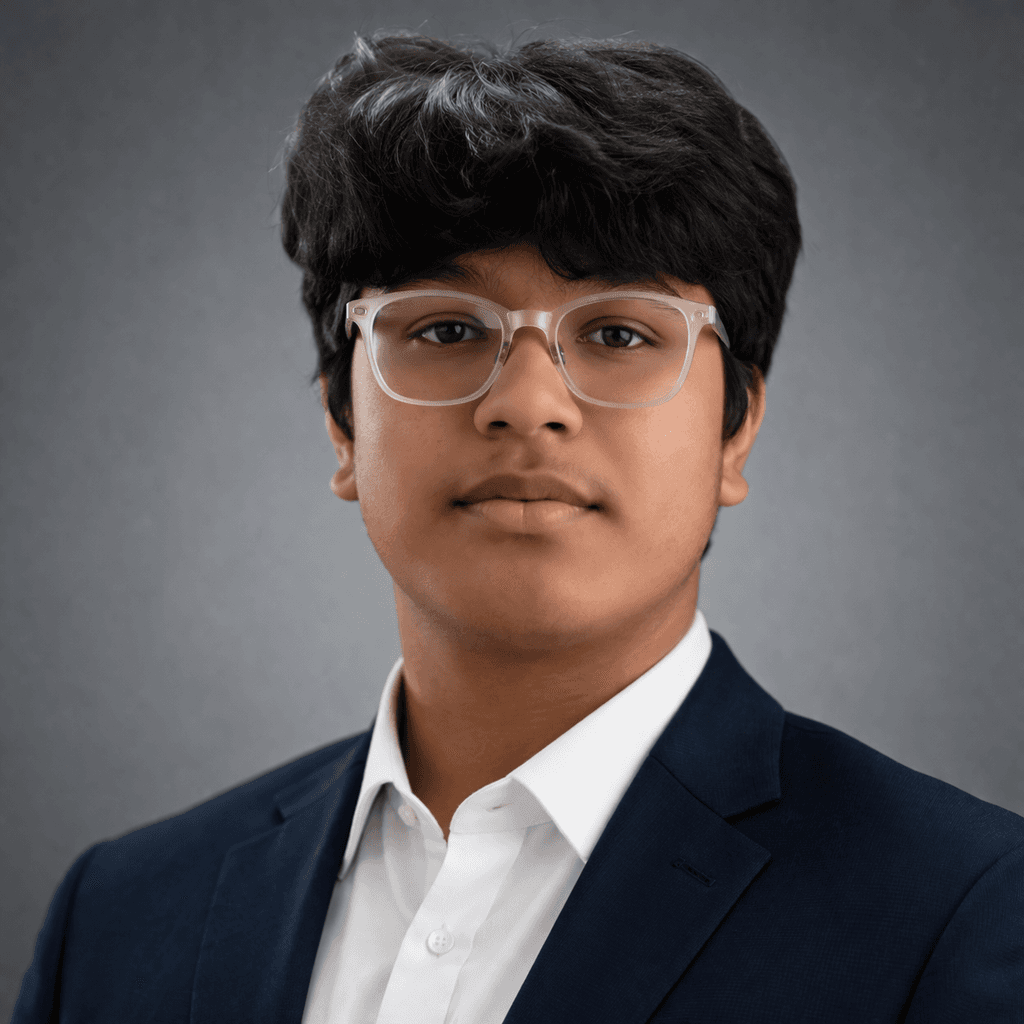
87% of Fellows publish. Devansh Gupta became a first author at an IEEE conference at 14, and Nidhi Kulkarni published a first-author IEEE paper after one summer. See every paper on the Published Work page. The Fellowship is $2,997, or 3 payments of $999, with scholarships considered case by case. See tuition and apply to the YRI Fellowship. Decisions come within 48 hours.
Sources
- ICMJE: Defining the role of authors and contributors (four criteria, byline order)
- American Mathematical Society: The Culture of Research and Scholarship in Mathematics, Joint Research and Its Publication (PDF)
- Springer: Instructions for Authors of Papers to be Published in Springer Computer Science Proceedings (PDF)
- Common App: Approaching the Activities Section (PDF)
- MIT Admissions: Portfolios and additional material (Research Supplement)
- Society for Science: Thermo Fisher JIC eligibility and important information
- Society for Science: Regeneron ISEF Grand Award judging criteria
- YRI: Published Work