The best-known research program for school students in Hyderabad is CCMB's Young Innovators Program, a two-week stint with scientists for students selected by a screening test. Beyond that, Hyderabad students can enter the IRIS National Fair and the Southern India Science Fair, apply to RSI-India at IISc, and work one-on-one with a mentor toward a published paper, which is the route several Hyderabad students have used to get first-author papers accepted at IEEE conferences.
This guide is for Hyderabad and Secunderabad parents and students who want to know what is available, how competitive it is, and what each option leads to. For the national overview, read Best Research Programs for High School Students in India.
Hyderabad research options at a glance
| Option | Who it is for | What the student gets |
|---|---|---|
| CCMB Young Innovators Program | School students from Hyderabad and nearby districts, by screening test | Two weeks of experiments and discussions with CCMB scientists |
| CCMB Open Day | Students and the public | A day inside CCMB's labs |
| Southern India Science Fair | Students selected through state education departments | Exhibiting a project at a zonal fair |
| IRIS National Fair | Classes 5 to 12 | A judged project and a path to ISEF |
| National Children's Science Congress | Ages 10 to 17, teams of two | District, state and national project rounds |
| RSI-India at IISc, Bengaluru | Class 11 Indian citizens, 32 seats | Six weeks of free mentored research |
| Online one-on-one mentorship (YRI Fellowship) | Any motivated student | A first-author paper submitted to IEEE, Springer or Elsevier |
CCMB: Hyderabad's strongest program for school students
The CSIR Centre for Cellular and Molecular Biology (CCMB) in Habsiguda runs the most substantial school program in the city.
Young Innovators Program (YIP). CCMB describes YIP as a platform for school students to spend an extended amount of time with its scientists. Of around 200 interested students from Hyderabad and nearby districts, the top 10% are selected through a screening test for a two-week program. Participants talk with young and senior scientists, carry out experiments, build instruments, and engage with topics such as climate change and antibiotic resistance through ecologists, wildlife biologists and microbiologists. With roughly 20 places a year, it is competitive. A student who gets in should go.
Open Day. CCMB opens its doors on the occasion of CSIR's Foundation Day. In 2024, more than 7,000 students and educators visited, met researchers, and saw the genetic laboratories. It is an easy first look at research for a Class 8 or 9 student.
Superheroes against Superbugs. CCMB has developed lesson plans and run workshops with secondary school students on antibiotic resistance.
CSIR Jigyasa. CCMB is a CSIR laboratory, and CSIR runs Jigyasa, a student-scientist connect program with Kendriya Vidyalaya Sangathan that links school students with CSIR labs.
Hyderabad's other research centres, including IIIT Hyderabad, IIT Hyderabad and the University of Hyderabad, focus on university and graduate research. A school student who wants time in one of their labs usually needs to write directly to an individual researcher with a specific question.
Science fairs: Southern India Science Fair, NCSC and IRIS
Southern India Science Fair. Hyderabad hosted the Southern India Science Fair 2026 at The Gaudium School's Kollur campus from January 19 to 23, 2026. It was organised by the Visvesvaraya Industrial and Technological Museum in Bengaluru, a unit of the National Council of Science Museums, with Telangana's Directorate of School Education and SCERT. Students and teachers from Andhra Pradesh, Karnataka, Kerala, Puducherry, Tamil Nadu and Telangana exhibited projects, and a Telangana team from Rajanna Sircilla won the second group prize.
National Children's Science Congress. NCSC is a Department of Science and Technology program for children aged 10 to 17, split into Junior (10 to 14) and Senior (above 14 and up to 17) groups. Teams of two students work with a guide teacher on a local problem and move from district to state to national rounds. The 2026 theme was "Science and Innovation for Sustainability."
IRIS National Fair. IRIS is India's ISEF-affiliated national fair, run by the ExSTEMplar Education Linkers Foundation and recognised by Society for Science. It is open to students of Indian origin living in India in Classes 5 to 12, individually or in teams of two, and its top finalists form Team India at Regeneron ISEF. For 2026-27, submissions ran from August 1 to October 13, 2026, and are closed; the National Fair is typically held in Bengaluru in January or February. Every project needs a project guide who verifies the work. Our guide How to Win the IRIS National Fair explains what the screeners look for.
National programs: RSI-India, INSPIRE and the end of KVPY
RSI-India. The free six-week RSI-India program at IISc in Bengaluru, run by the Center for Excellence in Education, takes 32 students for the 2027 session from June 6 to July 17, 2027. Applications close December 14, 2026. Applicants must be Indian citizens who have completed Class 10 and are currently in Class 11. Each student does an individual project with an IISc mentor and presents a paper and a talk.
INSPIRE. The KVPY test was discontinued from 2022 and the scheme moved into DST's INSPIRE programme. For school students, INSPIRE now offers INSPIRE-MANAK for Classes 6 to 12 (schools nominate up to five ideas) and INSPIRE Internship science camps for Class 11 science students. Neither includes a mentored research project.
Research internships for Class 11 students in Hyderabad
CCMB's Young Innovators Program is the closest thing Hyderabad has to an open research internship for school students, and it takes about 20 students. Outside of it, formal lab internships for students under 18 are rare, because labs have to manage supervision and safety. Most Class 11 students in Hyderabad who end up with a research result do it through RSI-India, a personal arrangement with a researcher, or one-on-one mentorship designed around a paper.
Hyderabad students who published
Hyderabad already has a strong record in student research.
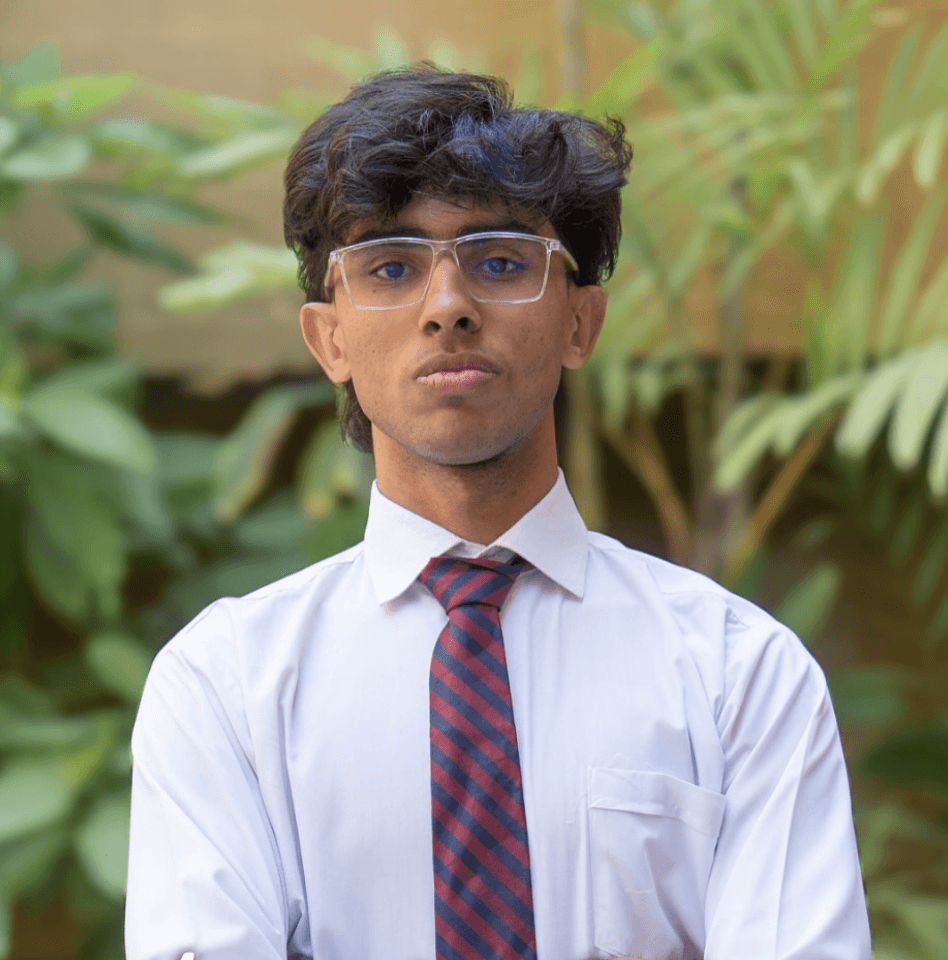
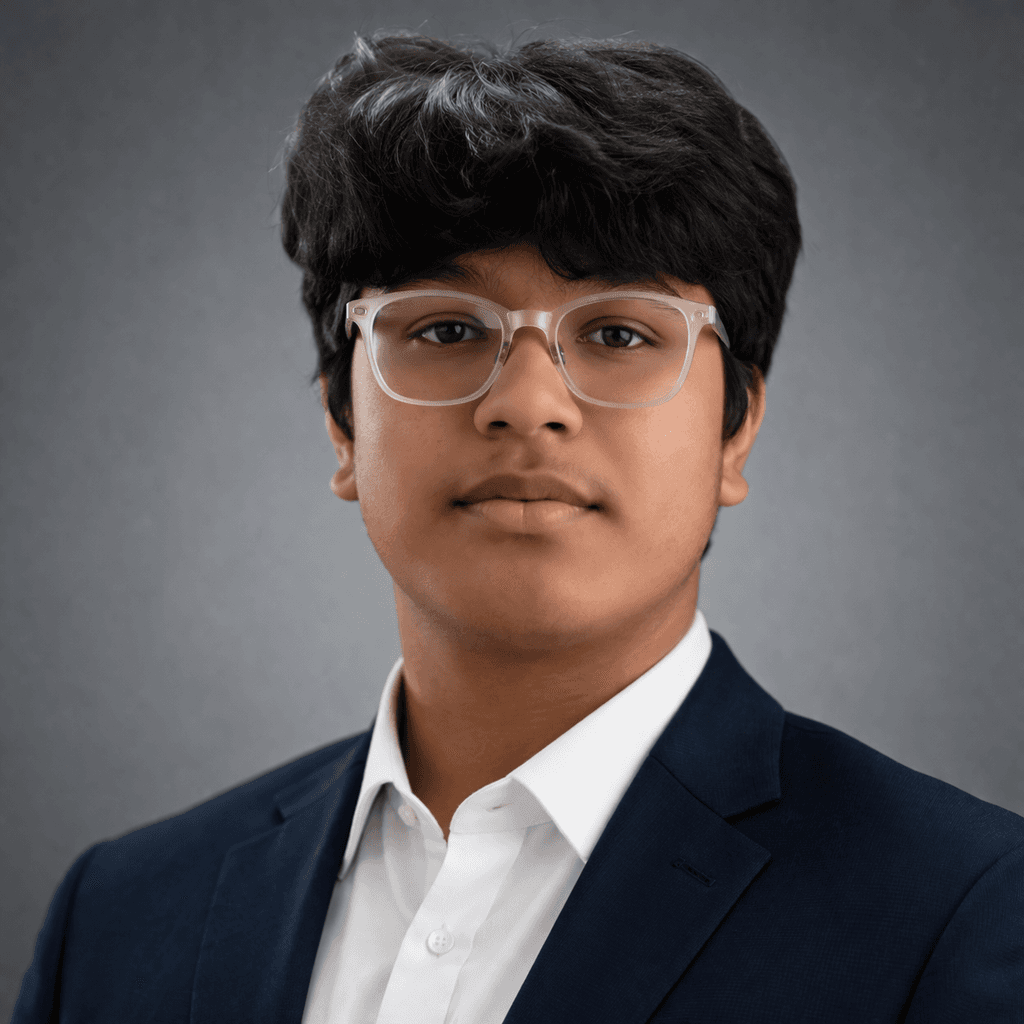
- Abhigna Naik, a student at Chirec International School, set out to close the diagnostic gap in rural India. She built ArogyaScan, an offline, low-cost AI screening framework that community health workers can run on ultrasound and chest X-ray images. Its lung classifier reached 98.08% accuracy, and her first-author paper was accepted at an IEEE conference (read her story).
- Ansh Kumar joined as a 9th grader at Sreenidhi International School with no publications. He published at MIT URTC, an IEEE-affiliated conference, had an IEEE paper accepted, and was nominated for the Rashtriya Bal Puraskar (read his story).
- Yuvan Ghanta, a 12th grader in Hyderabad drawn to astrophysics, modelled whether the Geminga and Monogem pulsars can explain the cosmic-ray positron excess. His first-author paper was accepted at an IEEE conference.
None of them needed a lab placement. They needed a question, a mentor and steady weekly work.
How to publish a research paper as a school student in India
Avoid any journal that guarantees acceptance for a fee. How to Publish in IEEE as a High School Student covers venues and timelines.
Why research matters for US college applications
Hyderabad sends many students to US universities. A first-author paper with a DOI is a credential an admissions reader can verify, which a board percentage is not. It also gives the student a specific story for essays and a mentor who can write a detailed recommendation. YRI Fellows have been admitted to Brown, Johns Hopkins, Stanford, Caltech and Harvard.
A timeline by class
- Class 8 and 9: Visit CCMB Open Day and start a first mentored project.
- Class 10: Finish a paper or judged project. Apply for CCMB's Young Innovators Program and enter NCSC or IRIS.
- Class 11: Apply to RSI-India. Start a second, more ambitious project.
- Class 12: Submit the paper and put every result on your applications.
Frequently Asked Questions
What is the best research program for school students in Hyderabad? CCMB's Young Innovators Program is the strongest local option, but it selects about the top 10% of around 200 applicants. For a published paper, most students use one-on-one mentorship such as the YRI Fellowship.
How do students get into CCMB's Young Innovators Program? Through a screening test. CCMB says it selects the top 10% of around 200 interested students from Hyderabad and nearby districts for a two-week program.
Was the Southern India Science Fair held in Hyderabad? Yes. The 2026 edition was held at The Gaudium School, Kollur, from January 19 to 23, 2026.
Can a Hyderabad student publish in IEEE? Yes. Abhigna Naik, Ansh Kumar and Yuvan Ghanta are examples of Hyderabad students with work accepted at IEEE conferences.
When does RSI-India close? December 14, 2026, for the 2027 session, according to CEE.
How the YRI Fellowship helps Hyderabad students
The YRI Fellowship gives every student what CCMB can only give about 20 a year: sustained one-on-one time with a scientist. Each student works with a PhD mentor in weekly online sessions for 10 weeks, spending 5 to 8 hours a week. An editing team reviews every draft, and a publishing team takes the paper to IEEE, Springer or Elsevier journals and conferences, with free help until it is published. Fellows get ISEF and JSHS preparation, which carries straight into IRIS, and a letter of recommendation from their mentor.
87% of Fellows publish and 73% place at science competitions. More than 1,000 students from 50+ countries have taken part, with a network of 1,000+ PhD mentors. No research experience is needed, and decisions come within 48 hours.
Tuition is $2,997, or 3 payments of $999, with scholarships considered case by case. See pricing, browse published work by YRI Fellows, and apply to the YRI Fellowship.
Sources
- CCMB: Outreach (Young Innovators Program, Superheroes against Superbugs, Jigyasa magazine)
- CCMB: Students and educators visit CCMB in large numbers on Open Day (2024)
- CSIR-NAL: Jigyasa student-scientist connect programme with KVS
- VITM: Southern India Science Fair 2026 prize list (venue, dates, organisers, states)
- KSCST: NCSC 2026 information (age groups, teams, theme)
- IRIS National Fair: homepage
- IRIS National Fair: FAQs
- CEE: Research Science Initiative India
- DST INSPIRE: programme components
- INSPIRE-MANAK: official site
- Careers360: KVPY test discontinued from 2022 and subsumed into INSPIRE
- YRI case study: Abhigna Naik
- YRI case study: Ansh Kumar