School students in Delhi NCR can do research through IIT Delhi's outreach programs, national schemes such as INSPIRE-MANAK and the National Children's Science Congress, the IRIS National Fair that leads to ISEF, RSI-India at IISc, and one-on-one mentorship that ends in a published paper. Delhi students have already used that last route to publish first-author papers at IEEE conferences, starting from no research experience.
This guide is for parents and students in Delhi, Noida, Gurugram, Ghaziabad and Faridabad. It explains what each option is, who can get in, and what it leads to. For the national overview, including fees and the history of each route, read Best Research Programs for High School Students in India.
Delhi NCR research options at a glance
| Option | Who it is for | What the student gets |
|---|---|---|
| IIT Delhi SciTech Spins | High school students, through schools | Lectures and lab demonstrations by IIT Delhi faculty |
| IIT Delhi STEM Mentorship Program | Class 11 girls | Mentoring and hands-on research problems |
| INSPIRE-MANAK | Classes 6 to 12, nominated by schools | Recognition for an original idea or innovation |
| National Children's Science Congress | Ages 10 to 17, teams of two | District, state and national project rounds |
| IRIS National Fair | Classes 5 to 12 | A judged project, and Team India camps in New Delhi and Gurugram for ISEF qualifiers |
| RSI-India at IISc, Bengaluru | Class 11 Indian citizens, 32 seats | Six weeks of free mentored research |
| Online one-on-one mentorship (YRI Fellowship) | Any motivated student | A first-author paper submitted to IEEE, Springer or Elsevier |
IIT Delhi: outreach for school students
IIT Delhi's academic outreach office has run two programs that Delhi parents should know about.
SciTech Spins. A lecture series for high school students in which IIT Delhi faculty explain research topics, from how viruses infect cells to the mysteries of the universe. Schools are the usual way in, so ask your school's science department about upcoming lectures.
STEM Mentorship Program for schoolgirls. IIT Delhi launched a mentorship program designed for Class 11 girls, with the stated aims of training students to think creatively about science, giving them hands-on experience in solving research problems, and building a stronger knowledge foundation.
Both programs are worth applying for. Like most institute outreach, they give exposure and mentoring rather than a paper with the student's name on it.
Delhi also has AIIMS, Delhi University, Jawaharlal Nehru University and many CSIR laboratories. These are built for advanced research. A school student who wants time in one of these labs usually gets it by writing to an individual researcher with a specific question.
National programs, many of them centred in Delhi
INSPIRE-MANAK. Run by the Department of Science and Technology with the National Innovation Foundation, INSPIRE-MANAK is open to students in Classes 6 to 12. Schools nominate up to five original ideas or innovations, with at most two from Classes 11 or 12 in the science stream. The national-level winners of the 12th edition were felicitated at Bharat Mandapam in New Delhi on October 14, 2026.
What replaced KVPY. The KVPY fellowship test was discontinued from 2022, and the scheme was folded into INSPIRE. There is no new exam in its place for school students. Instead, INSPIRE runs INSPIRE-MANAK, INSPIRE Internship science camps for Class 11 science students, and the Scholarship for Higher Education for students who go on to study natural sciences in college.
CSIR Jigyasa. Jigyasa is CSIR's student-scientist connect program, run with Kendriya Vidyalaya Sangathan, which links school students with CSIR laboratories for lab-based learning. Kendriya Vidyalaya students across NCR have the most direct access.
National Children's Science Congress. NCSC is a flagship DST program for children aged 10 to 17, split into a Junior Group (10 to 14) and a Senior Group (above 14 and up to 17). Teams of two students work with a guide teacher on a local problem, moving from district to state to national rounds. The 2026 theme was "Science and Innovation for Sustainability." Delhi has no shortage of topics: air quality, the Yamuna, heat and water.
IRIS National Fair and the road to ISEF
IRIS is India's ISEF-affiliated national fair, run by the ExSTEMplar Education Linkers Foundation and officially recognised by Society for Science. It is open to students of Indian origin living in India in Classes 5 to 12, individually or in teams of exactly two. Top finalists form Team India at Regeneron ISEF, and the team attends mentoring camps in New Delhi and Gurugram before the fair. Since 2006, IRIS has sent more than 385 Indian students to ISEF.
For the 2026-27 cycle, submissions ran from August 1 to October 13, 2026, and are closed. ISEF 2027 is May 8 to 14 in Los Angeles. Every project needs a project guide who verifies the student's work, and the entry fee is ₹5,000 plus applicable taxes per project, with an EWS waiver. A student in Class 9 or 10 today should aim to finish a project well before the next window opens. How to Win the IRIS National Fair explains the screening.
RSI-India: apply by December 14, 2026
RSI-India is a free six-week research program at IISc in Bengaluru, run by the Center for Excellence in Education. The 2027 session runs June 6 to July 17, 2027. Applications close December 14, 2026. Applicants must be Indian citizens who have completed Class 10 and are currently in Class 11, and they apply on their own, not through school nomination. Thirty-two students are selected and each completes an individual project with an IISc mentor, ending with a paper and a talk. A Delhi student with a finished research project has a much stronger application.
Research internships for Class 11 students in Delhi
Formal research internships for students under 18 are uncommon in Delhi's institutes, because labs must manage supervision and safety. A Class 11 student in Delhi NCR has three practical routes: a selective program such as RSI-India or IIT Delhi's mentorship program, a personal arrangement with a researcher, or one-on-one mentorship designed around a paper. The last route is the one that does not depend on a lab saying yes.
Delhi NCR students who published
Several YRI Fellows from Delhi NCR have taken the mentorship route and published:
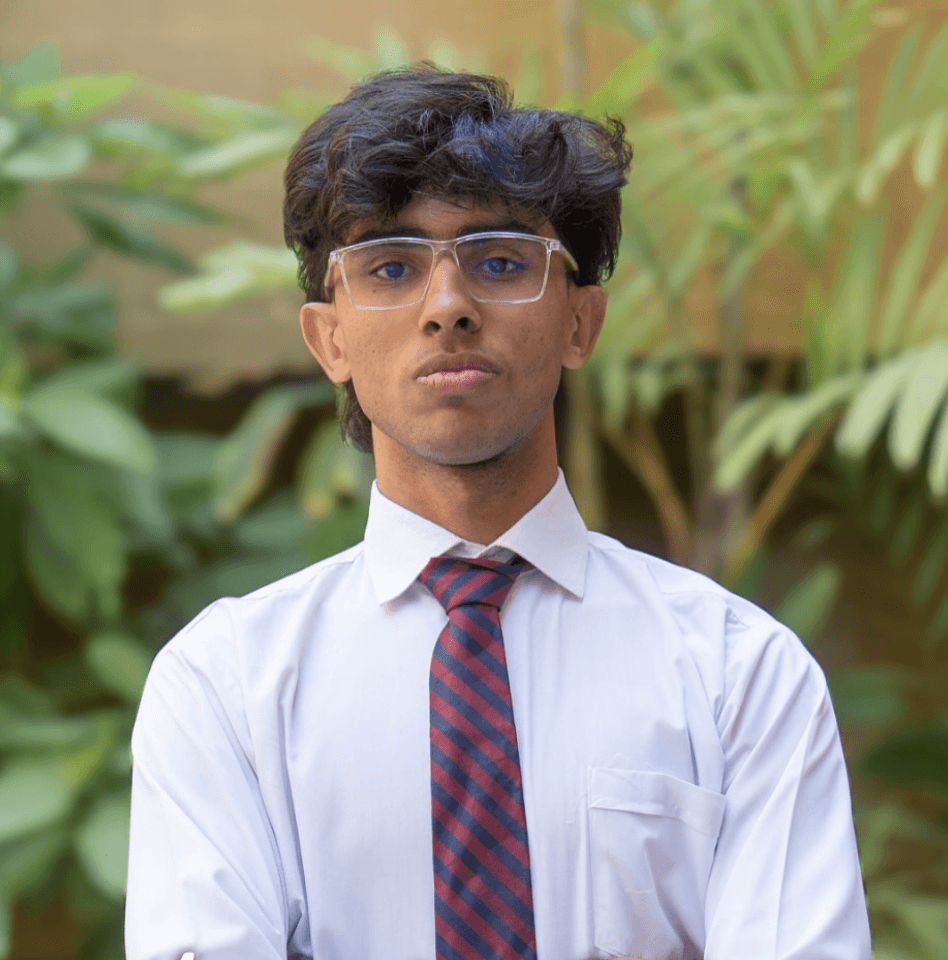
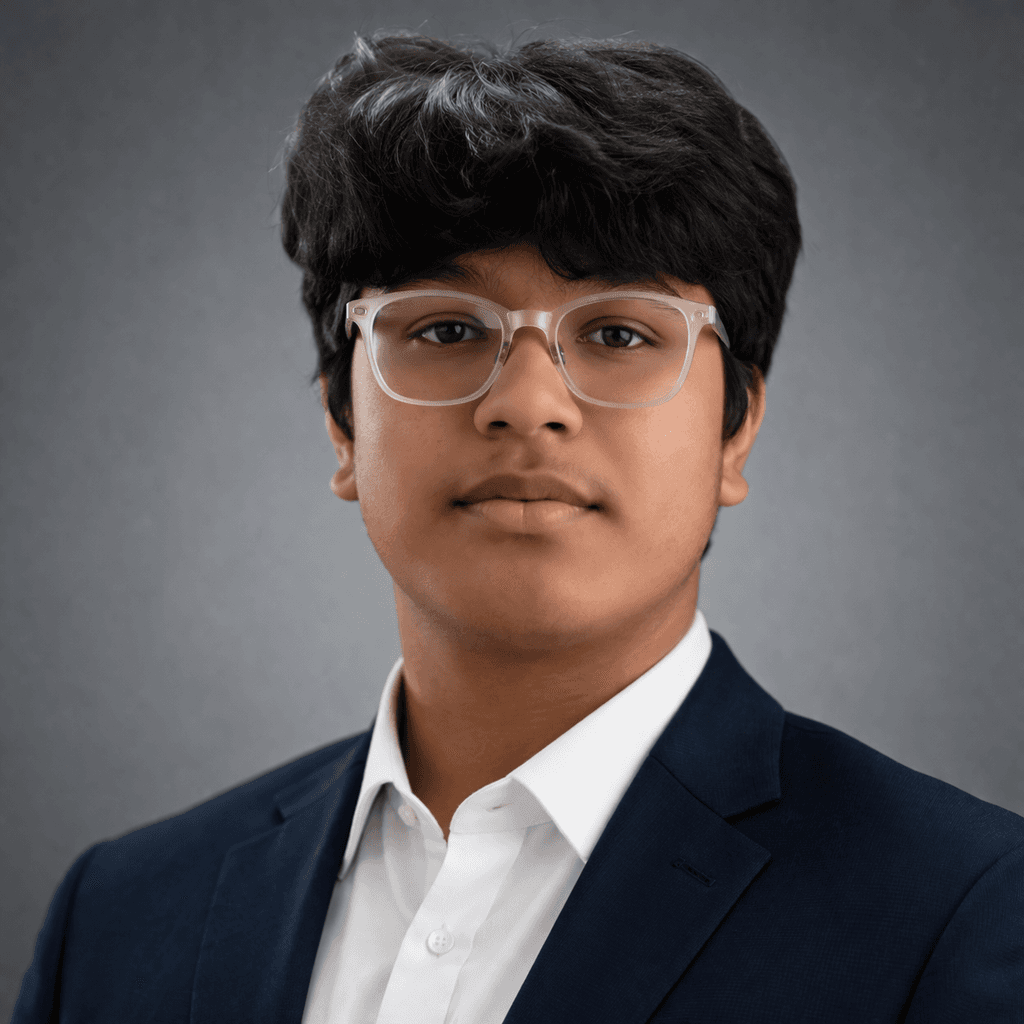
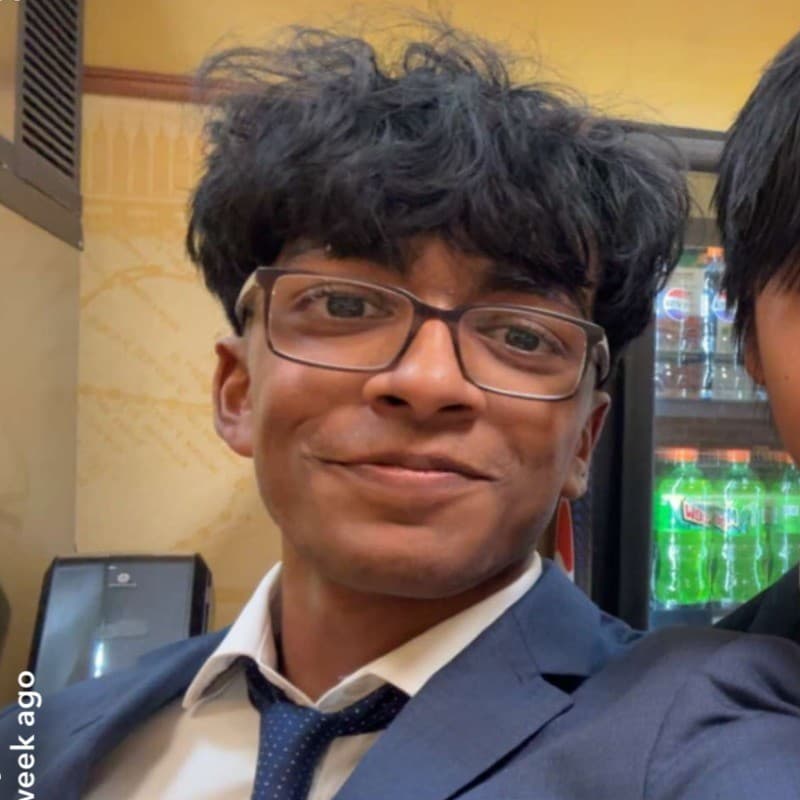
- Manomay Jain, a 12th grader at Modern School, Barakhamba Road, and an international math olympiad medalist, studied how to repair graph neural network outputs for the minimum vertex cover problem. His first-author paper was accepted at an IEEE conference with minor revisions (read his story).
- Ariham Jain, a 10th grader at Apeejay School International in New Delhi, compared three designs of vibration energy harvesters under representative everyday vibration conditions, and his first-author paper was accepted at an IEEE conference.
- Naitik Gupta, an 11th grader at MM Public School in Ghaziabad, built an explainable machine learning model for materials that remove heavy metals from water, accepted at an IEEE conference.
- Khyati Swain, a student at MVN Aravali Hills in Faridabad, built an AI model that predicts immune responses to cardiovascular implants, accepted at an IEEE conference.
- Sai Tarekar started with no coding experience and analysed water quality data for the Yamuna's Wazirabad-Okhla stretch in Delhi; his paper was accepted at IEEE ICSCSS 2026 (read his story).
How to publish a research paper as a school student in India
Avoid journals that promise guaranteed acceptance for a fee. How to Publish in IEEE as a High School Student covers venues and timelines in detail.
Why research matters for US college applications
For Delhi families applying abroad, a first-author paper is a credential that admissions readers can verify, unlike a board percentage they cannot easily compare. It gives the student a specific story for essays and interviews and a mentor who can write a detailed letter. YRI Fellows have been admitted to Brown, Johns Hopkins, Stanford, Caltech and Harvard.
Frequently Asked Questions
What research programs are there for school students in Delhi? IIT Delhi's SciTech Spins lectures and STEM Mentorship Program for Class 11 girls, INSPIRE-MANAK, the National Children's Science Congress, CSIR Jigyasa for Kendriya Vidyalaya students, the IRIS National Fair, RSI-India at IISc, and one-on-one mentorship programs such as the YRI Fellowship.
What replaced KVPY for school students? The KVPY test ended in 2022 and the scheme moved into INSPIRE. At school level, INSPIRE-MANAK and INSPIRE Internship camps are the main components.
Where does Team India train for ISEF? According to IRIS, students selected for Team India attend mentoring camps in New Delhi and Gurugram.
Can a Class 10 student in Delhi publish a paper? Yes. Ariham Jain was in Class 10 when he started his project, and his paper was accepted at an IEEE conference.
Is the RSI-India deadline confirmed? Yes. CEE's official page lists December 14, 2026 as the closing date for the 2027 session.
How the YRI Fellowship helps Delhi NCR students
The YRI Fellowship gives a Delhi student what most institute outreach cannot: a project of their own, a PhD mentor working with them one-on-one, and a clear path to publication. Sessions run weekly online for 10 weeks, so commutes across NCR do not matter. Students spend 5 to 8 hours a week. An editing team reviews every draft, and a publishing team takes the paper to IEEE, Springer or Elsevier journals and conferences, with free help until it is published. Fellows also get ISEF and JSHS preparation, which carries directly into IRIS and the road to Team India, and a mentor letter of recommendation.
87% of Fellows publish and 73% place at science competitions. More than 1,000 students from 50+ countries have taken part, with a network of 1,000+ PhD mentors. No research experience is needed, and decisions come within 48 hours.
Tuition is $2,997, or 3 payments of $999, with scholarships considered case by case. See pricing, and apply to the YRI Fellowship.
Sources
- IIT Delhi: SciTech Spins lecture for high schoolers
- IIT Delhi Alumni: STEM Mentorship Programme launched for Class 11 schoolgirls
- INSPIRE-MANAK: official site (Classes 6 to 12, nominations, 12th NLEPC at Bharat Mandapam)
- DST INSPIRE: programme components
- DST INSPIRE: notice on KVPY fellows moving to the INSPIRE portal
- Careers360: KVPY test discontinued from 2022 and subsumed into INSPIRE
- CSIR-NAL: Jigyasa student-scientist connect programme with KVS
- KSCST: NCSC 2026 information (age groups, teams, theme)
- IRIS National Fair: homepage
- IRIS National Fair: FAQs (Team India camps in New Delhi and Gurugram, ISEF 2027 dates)
- CEE: Research Science Initiative India
- YRI case study: Manomay Jain
- YRI case study: Sai Tarekar
- YRI student stories, including Ariham Jain, Naitik Gupta and Khyati Swain