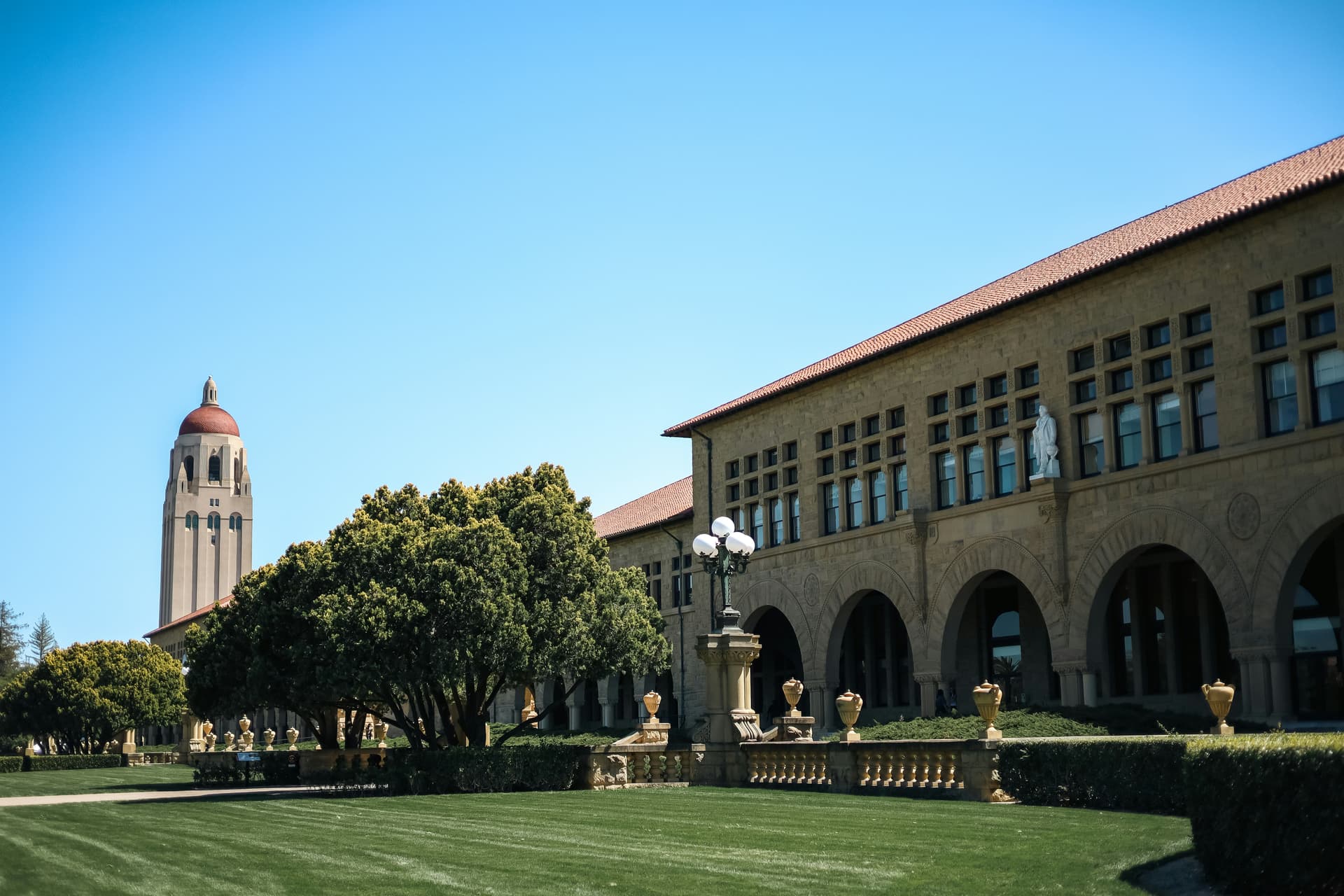
Stanford SIMR is a free, eight-week summer research internship at Stanford School of Medicine for current high school juniors and seniors who are U.S. citizens or green card holders, and the selection process strongly favors students who live in the Bay Area. Stanford expects around 50 students per summer, charges a $50 application fee (waived under $80,000 family income), provides no housing, and gives stipends only to a limited number of students based on need. The 2027 program runs June 7 to July 29, the application opens December 18, 2026, and it is due in late February 2027.
Everything below comes from Stanford's own SIMR pages and the official 2026 program information document, with one third-party guide used for the acceptance rate estimate. All are linked in the Sources section. Where Stanford has not published a number, we say so.
What SIMR is
The Stanford Institutes of Medicine Summer Research Program (SIMR) places high school students in a Stanford lab for eight weeks to work on a medically oriented research project. Each student gets a day-to-day mentor, a Stanford graduate student or postdoctoral fellow, inside the lab of a faculty member. Stanford describes the goals as increasing interest in biological sciences and medicine and helping students understand how research is done.
The program started in 1998 with 10 students inside Stanford's Center for Clinical Immunology, took the SIMR name in 2008 when five institutes joined, and added genetics, bioengineering and bioinformatics by 2013.
The summer is a full-time job. Stanford says students should expect about 40 hours a week on campus, Monday through Friday, with no evening or weekend work. The first two weeks include morning lectures a few times a week, most of the summer is lab work, and the last two weeks are spent preparing a research poster for the poster session on the final evening, which families and the Stanford community attend.
The eight institutes
Applicants rank their top five preferences from eight research areas. After acceptance, students receive a list of faculty hosts and rank again. Stanford asks applicants not to contact faculty directly.
| Area | Stanford unit |
|---|---|
| Immunology | Institute for Immunity, Transplantation and Infection |
| Neuroscience | Stanford Neurosciences Institute |
| Cancer Biology | Stanford Cancer Institute |
| Bioengineering | Department of Bioengineering |
| Stem Cell and Regenerative Medicine | Institute for Stem Cell Biology and Regenerative Medicine |
| Cardiovascular Biology | Stanford Cardiovascular Institute |
| Bioinformatics | Department of Biomedical Data Science |
| Genetics and Genomics | Department of Genetics |
There is also a second track inside SIMR called the Bioengineering Team Internship. Instead of lab research, students work in teams of four or five, three days a week (Monday, Wednesday and Friday, 9 to 4), on a biodesign project that addresses a medical need, and they build and test a prototype. The same application covers both tracks.
If you want to compare SIMR with other medical and biomedical options, see our guides to medical research programs for high school students and biomedical research in high school.
Eligibility, and the Bay Area preference
Stanford lists three requirements for summer 2027 and says there are no exceptions:
Students must also attend the first day, which includes mandatory orientation and safety training. If your school's finals run past the start date, Stanford says it is best to apply elsewhere.
The fourth factor is not a rule but matters as much as the three above. Stanford's mission statement says SIMR "will focus on creating opportunities for local Northern California students," and the FAQ says the selection process "will strongly favor local students due to various grant requirements." The 2026 program document defines local as within about a one-hour drive. Out-of-state students can apply, but they must name on the application the family member or legal guardian they will live with in the Bay Area. Hotels, Airbnbs and sublets are not allowed, and Stanford verifies housing for admitted students who are not local.
For families outside the Bay Area, this is the most important point in this guide. If you cannot place your student with a relative near Stanford for eight weeks, SIMR is close to off the table. Our guides to research programs in the San Francisco Bay Area and research programs in California list the alternatives.
Cost and stipend
| Item | Detail |
|---|---|
| Program fee | None. Stanford says there is no cost for selected students |
| Application fee | $50, waived if adjusted gross family income is under $80,000 or for special circumstances with a signed letter from a school official |
| Stipend | Not provided for most students. A limited number of need-based stipends come from special grants, considered for families under $80,000 |
| Housing | Not provided. Families arrange it, and students must live with a family member or legal adult guardian |
| Meals | Only at special events such as orientation, joint lectures and the final day |
| Transportation | Family's responsibility |
SIMR is free, but for most participants it is unpaid. Stanford's stipend page says plainly that stipends in general will not be provided.
Dates and deadline for 2027
| Milestone | Date |
|---|---|
| Application opens | December 18, 2026, 5 pm Pacific (Slideroom portal) |
| Application deadline | Late February 2027 (the 2026 deadline was February 21) |
| Fee waiver request deadline | In 2026, the day before the application deadline, 5 pm Pacific |
| Decisions emailed | Early April (April 10 in 2026) |
| Program dates | June 7 to July 29, 2027, tentative, 8 weeks |
| Poster session | Final evening of the program |
Stanford says there is no advantage to submitting early because all applications are reviewed together. Still, the portal closes at the deadline and Stanford accepts no edits, documents or test scores afterward, so submit with time to spare.
Keep the full calendar of competing programs in view with our 2027 summer research program deadlines post.
What the application asks for
The application runs through Slideroom. Based on the official 2026 program document, you will need:
- Transcript. Official or unofficial, showing all courses and grades from the start of 9th grade. Weighted and unweighted GPA if your school reports both. There is no minimum GPA.
- Standardized test scores. Optional. If you have taken the SAT, ACT, PSAT or AP exams, Stanford encourages you to report them, and screenshots are acceptable.
- One teacher recommendation. Exactly one, from a current or former high school teacher, submitted through the teacher's school email address. A science or math teacher is encouraged but not required. It is due at the same deadline.
- Two essays. Each limited to 3,500 characters including spaces, which is roughly one double-spaced page. Topics are given inside the application.
- Institute ranking. Your top five of the eight areas.
- Housing information. Who you will live with during the program, with name, address, email and phone.
- The $50 fee or a waiver request.
How to be competitive
Stanford does not publish what it weighs, so what follows is our reading of the application itself, which is opinion.
- Lead with the local connection. The application asks where you live and who you will stay with for a reason. If you are in the Bay Area, make it obvious. If you are not, be concrete about the relative you will live with.
- Rank institutes with a reason. Two 3,500-character essays are the only place to show why you want immunology over cancer biology, and what you have already done about that interest. A specific question beats a general love of medicine.
- Pick the teacher who has seen you work through something hard. One letter carries the whole recommendation weight. Our guide on how to get a strong letter of recommendation applies here.
- Show prior research, even small. SIMR does not require it, but a science fair project, a reading log of papers in your chosen area, or a short independent project gives the essays something to stand on. If you have not started, how to start a research project in high school is the place to begin.
- Treat the deadline as final. No late scores, no updates, no emails. Submit a day early.
The odds, frankly
Stanford does not publish an acceptance rate or an applicant count. The FAQ says the program expects "around 50 students," and the number depends on participating labs and funding. Pioneer Academics' guide notes that some online reports claim an acceptance rate of roughly 3 to 5 percent, which is an estimate, not a Stanford figure.
Two things are certain from Stanford's own pages: the class is about 50 students, and most seats go to local students. A strong applicant from Ohio or Texas is competing for a small share of a small class and must also solve housing. A strong Bay Area applicant has a meaningful chance and should apply.
Either way, the plan should not depend on this one decision in April. The students who win places at programs like SIMR, RSI and SSP are almost always the ones who already did research on their own before applying. See YRI vs RSI vs SSP for how the selective summer programs compare on that point.
If you do not get in
Around 50 students will hear yes in April 2027. Everyone else needs a plan that does not wait for next summer, and the strongest plan is the same thing most admitted students did anyway: do a research project with an expert mentor, write it up, and get it in front of reviewers.
That is what the YRI Fellowship is built for. It is 10 weeks, one-on-one with a PhD mentor matched to the student's field, and it ends with the student as first author on a paper submitted to a peer-reviewed IEEE, Springer or Elsevier venue. ISEF and JSHS preparation is included, the mentor writes a letter of recommendation, and mentorship continues at no extra cost until the paper is published. It is online, so it does not matter whether you live within an hour of Stanford. 87% of Fellows publish, 73% place at competitions, and Fellows have been admitted to Stanford, Harvard, Caltech, Johns Hopkins and Brown.
The cost is $2,997, with a three-month payment plan and scholarships considered case by case. Admissions are rolling, so a student who hears no from SIMR in April can start in May and have a submitted paper before senior-year applications open. For how publication works at the high school level, read how to publish a research paper in high school.
Download the YRI Fellowship brochure
The program, the outcomes, the mentors and the tuition, in one PDF you can read with your family.
Related guides
- Medical research programs for high school students
- Biomedical research in high school, the complete guide
- Research programs in the San Francisco Bay Area
- Research programs for high school students in California
- Summer research program deadlines for 2027
- Research opportunities for high school students
Frequently Asked Questions
What is the SIMR acceptance rate?
Stanford does not publish one. The program expects around 50 students each summer, and third-party guides report estimates of roughly 3 to 5 percent, which are not official. Selection strongly favors Bay Area students.
Who is eligible for Stanford SIMR in 2027?
Current juniors and seniors as of fall 2026 (class of 2027 or 2028) who are 16 or older by the June 2027 start, live in and attend high school in the U.S., and are U.S. citizens or permanent residents with a green card. Stanford allows no exceptions.
Does SIMR pay a stipend?
For most students, no. SIMR is free to attend, and a limited number of need-based stipends are given from special grants, considered for families with income under $80,000.
How much does SIMR cost?
There is no program fee. The application fee is $50, waived for families under $80,000 adjusted gross income. Families cover housing, transportation and most meals.
When is the SIMR 2027 deadline?
Stanford says applications open December 18, 2026 and are due in late February 2027. The 2026 deadline was February 21, with decisions on April 10. Check simr.stanford.edu for the exact 2027 date.
Can students outside the Bay Area apply to SIMR?
Yes, but Stanford states a strong preference for local students, provides no housing, and requires non-local students to live with a family member or legal guardian in the area. Hotels and short-term rentals are not permitted.
Does SIMR require research experience?
No. There is no minimum GPA and test scores are optional. Prior research is not required, but it gives the two essays something concrete to describe.
What is the best alternative if I do not get into SIMR?
A mentored research project that ends in a published paper, which is what most admitted students had already started before applying. The YRI Fellowship pairs students with a PhD mentor for 10 weeks, ends in a first-author paper submitted to a peer-reviewed venue, includes ISEF and JSHS preparation, and has rolling admissions, so you can start right after April decisions.
Sources
- Stanford SIMR: homepage (program description, 2027 eligibility, tentative 2027 dates, application opening)
- Stanford SIMR: Application (2026 deadline, fee, decision date, program dates, grace period)
- Stanford SIMR: Frequently Asked Questions (class size, cost, stipends, housing, Bay Area preference, schedule, mentors)
- Stanford SIMR: Program Information (eight institutes, Bioengineering Team Internship)
- Stanford SIMR: Mission (focus on local Northern California students)
- Stanford SIMR: Participant Stipends
- Stanford SIMR: History (1998 founding, 2008 rename, class sizes)
- Stanford SIMR: Contact Us (2027 tentative dates, application availability)
- Stanford SIMR: 2026 Program Information and Application Instructions (PDF: eligibility, one-hour local preference, housing, stipends, essays, recommendation, fee waiver)
- Pioneer Academics: SIMR guide (reported acceptance rate estimate)