Pakistani students in Matric, O and A Levels or FSc have four main routes into research: the National Science and Engineering Fair Pakistan, which leads to Regeneron ISEF, the HEC and PIEAS STEM Careers Programme olympiads, university programs such as the LUMS Summer Research Programme, and online one-on-one mentorship that ends in a published paper. Structured research programs for school students are limited, so the right mentor makes the biggest difference, and online mentorship removes the dependence on living near the right lab.
This guide covers each route with official sources and explains what each one produces for Pakistani and international university applications.
The routes at a glance
| Route | Who it is for | Format | What you leave with |
|---|---|---|---|
| National Science and Engineering Fair Pakistan, then ISEF | Students with a finished research project | National fair | Category awards, and for top projects a place at Regeneron ISEF |
| National Science Talent Contest (STEM Careers Programme) | Students strong in physics, chemistry, biology or mathematics | Screening test, then training camps | A place on Pakistan's International Science Olympiad teams |
| LUMS Summer Research Programme | High school and undergraduate students | 8 to 10 weeks with LUMS faculty or mentors | A supervised research project |
| LUMS Summer School and FutureTech | Pre-college students | Short summer courses and bootcamps | Skills and exposure, not a paper |
| Online one-on-one mentorship | Any student, any city, any board | 10 weeks online with a PhD mentor | A first-author paper submitted to a peer-reviewed venue |
National Science and Engineering Fair Pakistan and the road to ISEF
The National Science and Engineering Fair Pakistan is a national route to Regeneron ISEF, the international science fair run by Society for Science. YRI Fellow Mubashir Suhail from Karachi won Best of Subject Category at the National Science and Engineering Fair Pakistan 2025 and qualified to represent Pakistan at Regeneron ISEF 2026 in Phoenix, Arizona. ISEF 2027 is May 8 to 14 in Los Angeles.
What families should know:
- The project must be research, not a model. Judges look for a question, a method, data, analysis and a clear write-up. A working model or a poster summary of a textbook topic does not compete at this level. What makes a project ISEF-worthy explains the criteria.
- ISEF rules apply from day one. Projects involving human participants, animals or biological materials need approval before research begins. Our ISEF guide covers the forms.
- Start early. A project aimed at the national fair should be finished well before the fair, which means starting the research months in advance.
A YRI Fellow from Karachi
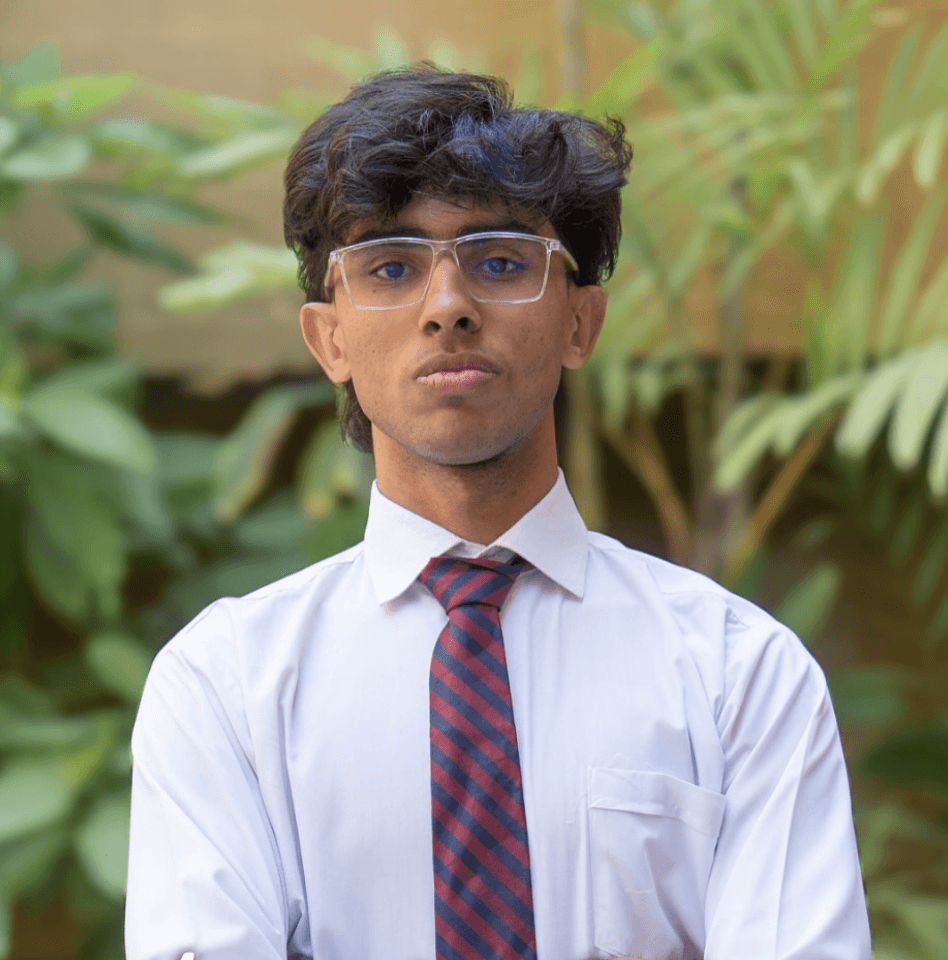
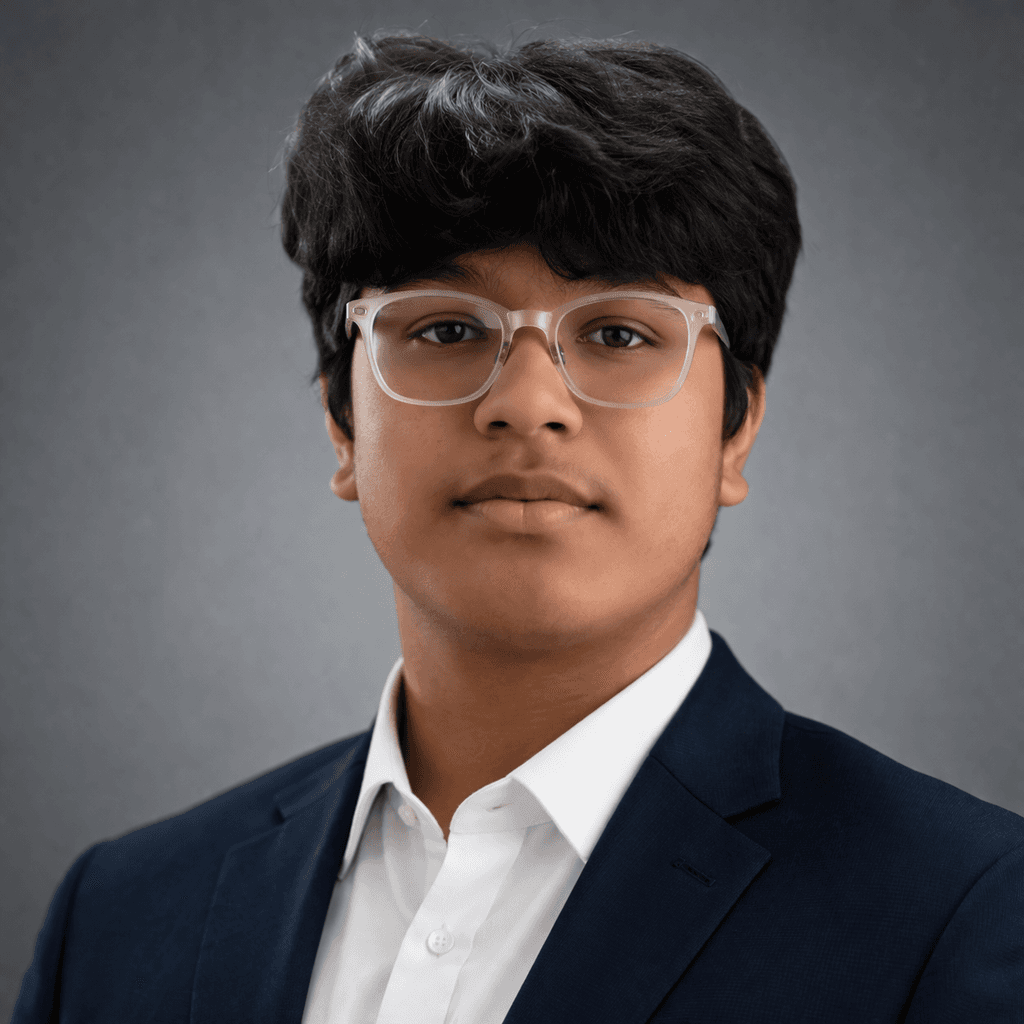
Mubashir Suhail was a high school student in Karachi, passionate about physics and computer science, with no prior research experience. He wanted to detect gravitational waves without the expensive GPU hardware that machine learning in astrophysics usually needs.
Working with his YRI mentor, he trained a lightweight convolutional neural network of roughly 92,000 parameters on LIGO-Virgo detector strain data using free Google Colab, then built a peer-to-peer distributed training framework that lets 100 standard laptops match a single NVIDIA V100 GPU, with 80x gradient compression for low-bandwidth connections. His paper is titled "A Low-Resource Convolutional Neural Network Pipeline for Gravitational-Wave Signal Classification." The project won Best of Subject Category at the National Science and Engineering Fair Pakistan 2025 and qualified him to represent Pakistan at ISEF 2026. Read the full story of his ISEF journey.
His project shows something important for Pakistani students: a world-class project does not need an expensive lab. It needs a sharp question and a mentor who can guide the method.
National Science Talent Contest and the International Olympiads
The STEM Careers Programme is a joint venture of the Higher Education Commission (HEC) and the Pakistan Institute of Engineering and Applied Sciences (PIEAS). Its National Science Talent Contest (NSTC) selects Pakistan's teams for the International Science Olympiads in biology, chemistry, mathematics and physics.
How it works:
Pakistan has taken part in the International Physics Olympiad since 2001, the Mathematics Olympiad since 2005, and the Biology and Chemistry Olympiads since 2006.
Best for: Students who excel at problem-solving exams in one subject.
Keep in mind: Olympiads reward exam performance, not original research. A medal is a strong credential, but it is a different achievement from a paper or an ISEF project.
LUMS Summer Research Programme
The Lahore University of Management Sciences runs a Summer Research Programme through its Office of Research, designed to encourage high school and undergraduate students to do research under the supervision of LUMS faculty and other mentors. Projects can be theoretical, field or lab based, or focused on data collection and analysis. The programme runs 8 to 10 weeks, and up to six months when students use funding for their project. Contact the LUMS Office of Research at or@lums.edu.pk for current dates and how to apply.
LUMS also runs a pre-college Summer School. In 2024 it included FutureTech, a one-week bootcamp for high school students led by LUMS professors, covering artificial intelligence, machine learning and data science.
Best for: Students in or near Lahore who want supervised research or a short introduction to a field.
Keep in mind: Places and projects depend on faculty availability, and summer courses build skills rather than produce a paper.
Research with a university professor
Professors at universities in Karachi, Lahore and Islamabad sometimes take on motivated school students, almost always through a direct request. Mention one of their recent papers, explain what interests you and ask for a defined project. Our guide on how to email a professor about research has templates.
Online one-on-one mentorship with publication
For most Pakistani students, online mentorship is the route that does not depend on the city, the school or personal connections.
The YRI Fellowship is fully online and open to students in 50+ countries. Each student works one-on-one with a PhD mentor for 10 weeks, 5 to 8 hours a week, in any field. Sessions are scheduled around Pakistan's time zone and board exam calendars, whether the student is on Matric, FSc, O and A Levels or another curriculum.
What is included:
- A 1:1 PhD mentor matched to the student's field, from 1,000+ PhD mentors.
- An editing team on every draft and a publishing team that takes the paper to IEEE, Springer or Elsevier journals and conferences.
- Free help until the paper is published.
- ISEF and JSHS preparation, and a mentor letter of recommendation.
87% of Fellows publish and 73% place at science competitions. No research experience is needed, as Mubashir's story shows.
What universities look for
For US universities, a published paper or an ISEF qualification is one of the few credentials that reads the same across school systems. Admissions readers cannot easily compare a Pakistani board result against an American transcript, but they can read a paper in an IEEE venue. Fellows have been admitted to Brown, Johns Hopkins, Stanford, Caltech and Harvard.
For UK universities, a paper gives the UCAS personal statement concrete material.
For Pakistani universities, research experience gives applications and interviews substance at institutions that look beyond exam scores.
A timeline for Pakistani students
- Class 9 and 10 (O Level or Matric): Start a mentored project and finish a first paper. Sit the NSTC screening if you are strong in a core subject.
- Class 11 (First year FSc or AS): Take a stronger project to the National Science and Engineering Fair. Apply for summer research.
- Class 12 (Second year FSc or A2): Present, publish and list every result on your applications. There is little time for a new project in exam year.
Frequently Asked Questions
How can Pakistani students qualify for ISEF? The National Science and Engineering Fair Pakistan is a national route. YRI Fellow Mubashir Suhail won Best of Subject Category there in 2025 and qualified to represent Pakistan at ISEF 2026.
What is the National Science Talent Contest? An HEC and PIEAS contest under the STEM Careers Programme that selects Pakistan's International Science Olympiad teams in biology, chemistry, mathematics and physics.
Are there research programs for high school students at LUMS? Yes. The LUMS Summer Research Programme is designed for high school and undergraduate students to research under LUMS faculty and mentors.
Do I need a lab to do strong research in Pakistan? No. Many strong projects are computational. Mubashir trained his model on free Google Colab.
Can a Pakistani student publish a research paper in high school? Yes, with a mentor and a focused question. See published work for examples.
How the YRI Fellowship helps Pakistani students
If the goal is a first-author paper, a project strong enough for the national fair and ISEF, and a standout university application, the YRI Fellowship is built for exactly that. One-on-one PhD mentorship for 10 weeks, an editing team on every draft, a publishing team for IEEE, Springer and Elsevier venues, ISEF and JSHS preparation and free help until the paper is published.
Tuition is $2,997, or 3 payments of $999, with scholarships considered case by case. See pricing and apply to the YRI Fellowship. Decisions come within 48 hours.
Sources
- YRI case study: Mubashir Suhail, National Science and Engineering Fair Pakistan 2025 and Regeneron ISEF 2026
- Society for Science: Regeneron ISEF
- STEM Careers Programme (HEC and PIEAS): National Science Talent Contest
- LUMS Office of Research: Summer Research Programme
- LUMS: Summer School 2024 and FutureTech
- YRI Fellowship: program details
- YRI Fellowship: pricing