A high school student can do publishable astronomy and space science research without owning a telescope, because space agencies and observatories release their data to the public. The students who publish download data from missions such as TESS or LIGO, ask one narrow question about it, and answer it with careful analysis, modeling or machine learning.
This guide covers the questions that work, the free data archives, the methods a student can carry out, where astronomy papers by students get published, which competitions fit, and the astronomy and space science papers YRI Fellows have written. If you want the wider physics picture, including lab experiments in mechanics and optics, see our physics research guide.
Why astronomy is open to students
Astronomy has one of the most open data cultures in science. Missions funded by public money usually publish their observations in archives anyone can search. That means a student in any country can work with the same light curves, catalogs and detector data professional astronomers use.
The other advantage is scale. These archives hold far more data than astronomers have time to study closely, so careful questions about specific objects, methods or blind spots are still open.
Areas of astronomy and space science research
| Area | Example focus | Typical data |
|---|---|---|
| Exoplanets | Detecting, characterizing or ranking planets around other stars | Light curves, planet catalogs |
| Stellar astronomy | Variable stars, periods, stellar populations | Light curves, star catalogs |
| Gravitational waves | Classifying signals from merging black holes and neutron stars | Detector strain data |
| High-energy astrophysics | Cosmic rays, pulsars, particle excesses | Published measurements, models |
| Space weather | Solar flares, particle events, effects on satellites | Space weather satellite data |
| Space operations and safety | Satellite collisions, orbital debris | Conjunction and orbit data |
| Aerospace materials | Heat shields, spacecraft structures | Materials databases |
Example research questions
Exoplanets:
- How does a telescope's sampling cadence change the chance of missing very short planet transits?
- Can a machine-learned habitability index rank exoplanets better than fixed-formula indices?
Gravitational waves:
- How small can a neural network be and still classify gravitational-wave signals reliably?
- Can ordinary laptops share the work of training a gravitational-wave classifier?
High-energy astrophysics:
- Could nearby pulsars account for part of the cosmic-ray positron excess under a simple diffusion model?
Space weather and operations:
- Can a sequential detection method flag solar energetic particle events from proton flux data with fewer false alarms?
- Which satellite encounters look safe two days out but become high risk later?
Each question names a dataset, a method and a measurable outcome.
Where to find free astronomy data
- NASA Exoplanet Archive: catalogs of confirmed planets and candidates, with stellar and planetary parameters.
- MAST, the Mikulski Archive for Space Telescopes: data from missions including TESS, Kepler and Hubble.
- Gravitational Wave Open Science Center (GWOSC): public data from the LIGO, Virgo and KAGRA detectors.
- Sloan Digital Sky Survey (SDSS): imaging and spectra of stars, galaxies and quasars.
- ESA Gaia Archive: positions, distances and motions of stars.
- NOAA Space Weather Prediction Center: solar and geomagnetic data.
- Zooniverse: citizen science projects that let students classify astronomy data and learn how it works.
Methods a student can actually carry out
1. Light curve analysis
A light curve is brightness over time. Students search for transits, measure periods of variable stars, and test detection methods. The tools are free Python libraries, and the data comes straight from the archive.
2. Injection and recovery tests
To learn what a survey misses, you plant simulated signals into data and check which ones a detection method finds. This method produces clear, publishable results about detection limits.
3. Machine learning on space data
Classifiers sort gravitational-wave signals from noise, rank planets, or flag rare events. The best student papers explain why the model works and where it fails, not just its accuracy.
4. Physical modeling
Some questions are answered with equations, not data downloads. A diffusion model of how particles travel through the galaxy, for example, can test whether a proposed source could explain a measured excess.
5. Observing with a small telescope
School and amateur telescopes can measure variable star brightness or asteroid positions. This is slower and weather-dependent, so most students combine their own observations with archive data.
Astronomy and space science papers by YRI Fellows
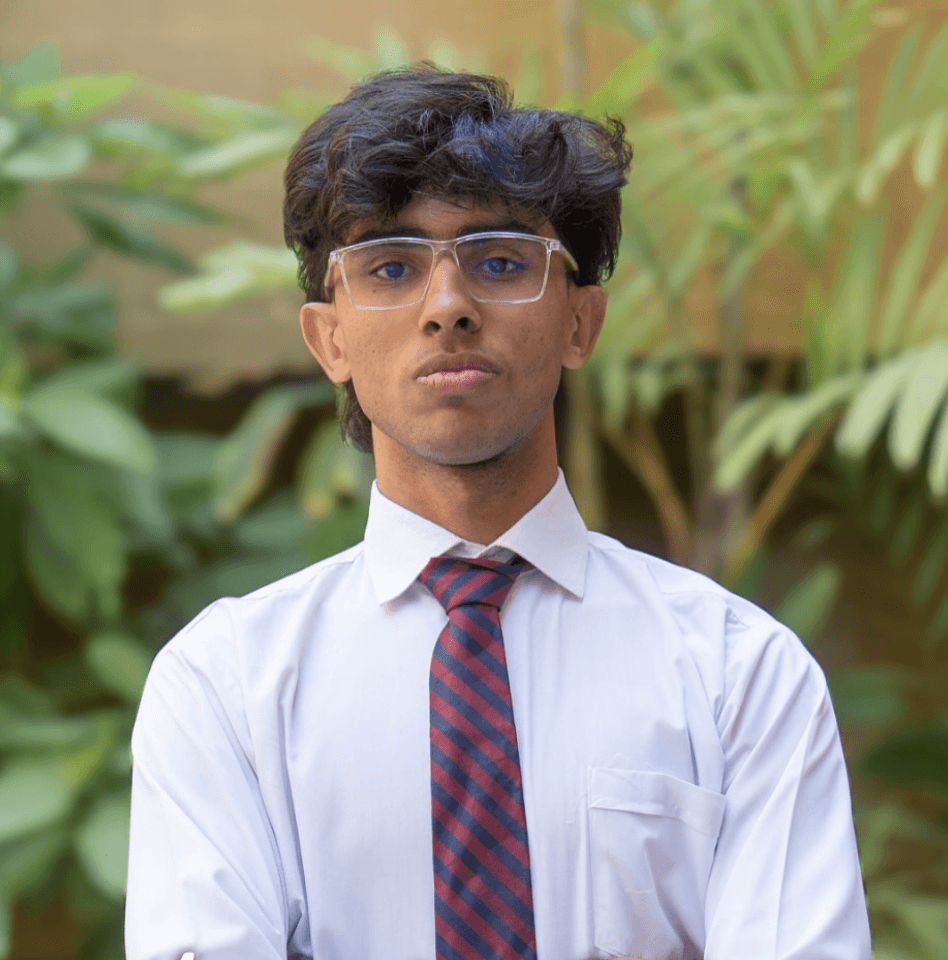
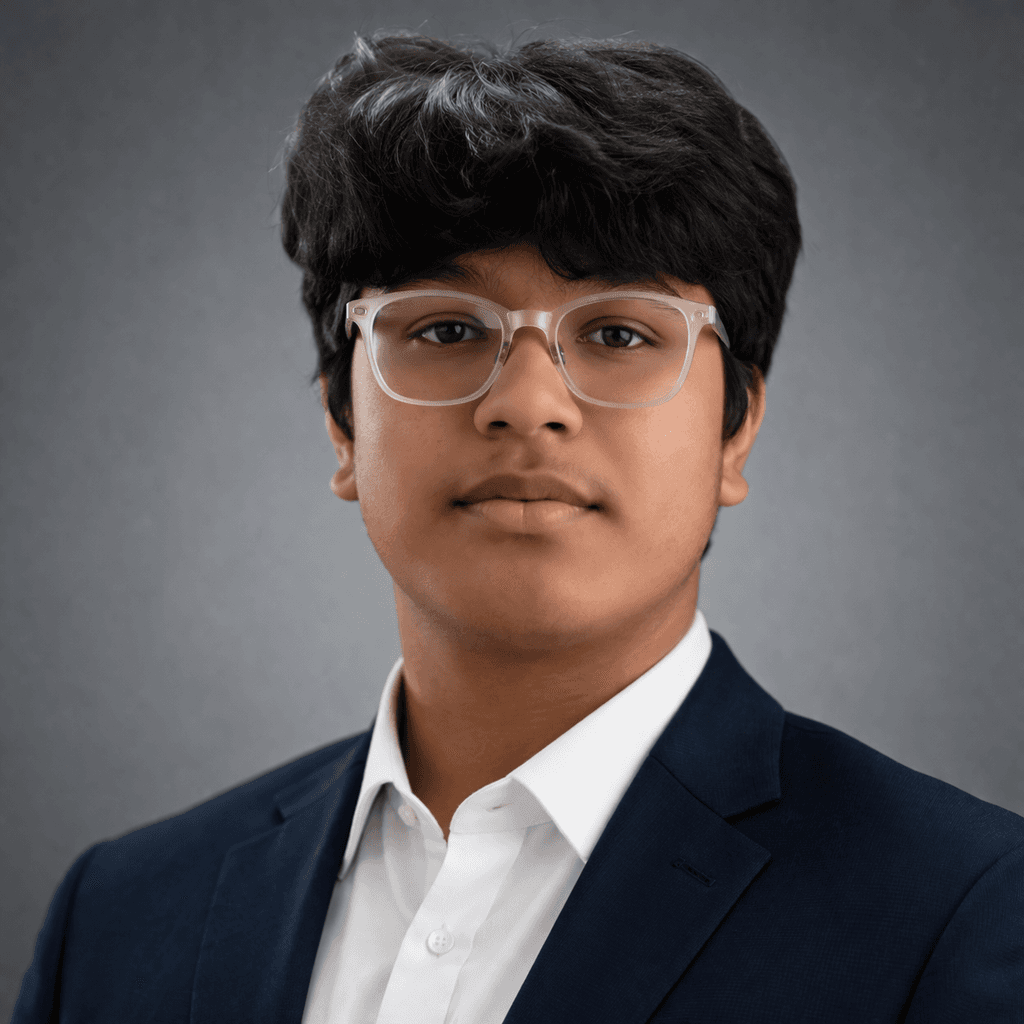
These Fellows did astronomy and space research with PhD mentors. More are on our published work page.
- Ruthwik D., an 11th grader, built METHI, an ensemble machine-learned exoplanetary habitability index that improves on fixed-formula indices, scored 0.903, and ranked the top 10 habitable candidates. He also released a public web tool that returns a habitability score for any planet name. Published in IEEE Xplore. Read his story.
- Ana P., a 12th grader, ran a reproducible injection-and-recovery study modeled on TESS-like observations to map how observing cadence hides very short exoplanet transits. First-author paper accepted at an IEEE conference. Read her story.
- Yuvan G., a 12th grader, built a simplified two-zone diffusion model to test whether the Geminga and Monogem pulsars could contribute to the cosmic-ray positron excess. First-author paper accepted at an IEEE conference. Read his story.
- Mubashir S., from Pakistan, trained a lightweight neural network of about 92,000 parameters on LIGO-Virgo detector data using free Google Colab, then built a peer-to-peer framework so 100 standard laptops can match one high-end GPU. He won Best of Subject Category at the National Science and Engineering Fair Pakistan 2025 and qualified for Regeneron ISEF 2026. Read his story or the ISEF announcement.
- Jayant K. qualified for ISEF 2026 with a low-resource neural network for gravitational-wave classification.
- Krishik S., a 9th grader, analyzed 10,460 satellite conjunction events and showed that 25% of eventually high-risk cases sit below standard alert thresholds two days before closest approach. His trajectory features lifted ROC-AUC on that hard group from 0.885 to 0.915. First-author paper accepted at an IEEE conference. Read his story.
- Atria D. wrote "Audited Sequential Detection of Solar Energetic Particle Events from NOAA GOES Proton Flux," an IEEE paper on space weather.
- Arjun V. used NASA materials data and machine learning to find the strongest composite combinations for spacecraft heat shields. Read his story.
Where student astronomy papers get published
IEEE conferences. Astronomy projects built on signal processing, machine learning or data analysis fit IEEE conferences, and accepted papers are listed in IEEE Xplore.
Astronomy journals and preprints. Professional astronomy journals have high bars, and many astronomers share work as preprints on arXiv. arXiv requires new submitters to be endorsed, usually by an established author.
Student journals. Several journals publish student work across sciences. Check scope, fees and review process before submitting.
Astronomy at science competitions
Regeneron ISEF places astronomy in the Physics and Astronomy category. Its subcategories include Astronomy and Cosmology; Nuclear and Particle Physics; and Theoretical, Computational, and Quantum Physics. Spacecraft and aerospace engineering projects fit the Aerospace and Aeronautical Engineering subcategory of Engineering Technology: Statics and Dynamics. Our ISEF guide explains how to qualify.
JSHS judges a research talk with live questions, a good format for students who can explain a space data project clearly.
Breakthrough Junior Challenge asks for a short video explaining a science concept, which suits students who love explaining the universe.
Common mistakes in student astronomy projects
- Rediscovering known objects. Check the catalogs before you announce a "new" planet or star.
- Ignoring noise and systematics. Telescope data has gaps, trends and artifacts. Account for them.
- Accuracy without context. A classifier needs a comparison against a standard method.
- Too much scope. One object class, one dataset, one method.
- Not citing the mission. Archives ask users to acknowledge the data source. Do it.
Frequently asked questions
Do I need a telescope to do astronomy research?
No. Every Fellow above worked with public archive data or models. A small telescope is a bonus, not a requirement.
What should I learn first?
Python and basic statistics. Free astronomy libraries handle file formats and light curves, and you can learn the physics you need as you go.
Is astronomy research different from physics research?
Astronomy is a branch of physics focused on objects in space. Astronomy research usually means observation and data, while physics research also includes lab experiments.
Can astronomy research help with college applications?
A first-author paper in astronomy shows quantitative skill, persistence and the ability to work with professional data. It also gives you a specific story for essays and interviews.
What is the easiest astronomy project to start with?
A light curve project using TESS or Kepler data from MAST, with one clear question about detection or periods.
How the YRI Fellowship helps you publish astronomy research
The YRI Fellowship matches you 1:1 with a PhD mentor in astronomy, astrophysics or space science for 10 weeks of weekly sessions, about 5 to 8 hours of work a week. Your mentor helps you choose an archive and a question, build the analysis or model, and check every result. An editing team works through every draft, and a publishing team gets the paper into IEEE, Springer or Elsevier journals and conferences, with free help until it is published.
87% of Fellows publish and 73% place at science competitions. ISEF and JSHS preparation and a mentor letter of recommendation are included. No research experience is needed, and decisions come within 48 hours.
Tuition is $2,997, or 3 payments of $999, with scholarships considered case by case. See pricing and more student stories.
Sources
- Society for Science: ISEF categories and subcategories
- NASA Exoplanet Archive
- MAST: Mikulski Archive for Space Telescopes
- Gravitational Wave Open Science Center
- Sloan Digital Sky Survey
- ESA Gaia Archive
- NOAA Space Weather Prediction Center
- Zooniverse
- arXiv: endorsement policy
- IEEE Xplore: METHI, Ruthwik D.
- YRI case study: Ruthwik D.
- YRI case study: Ana P.
- YRI case study: Yuvan G.
- YRI case study: Mubashir S.
- YRI case study: Krishik S.
- YRI case study: Arjun V.
- YRI Published Work