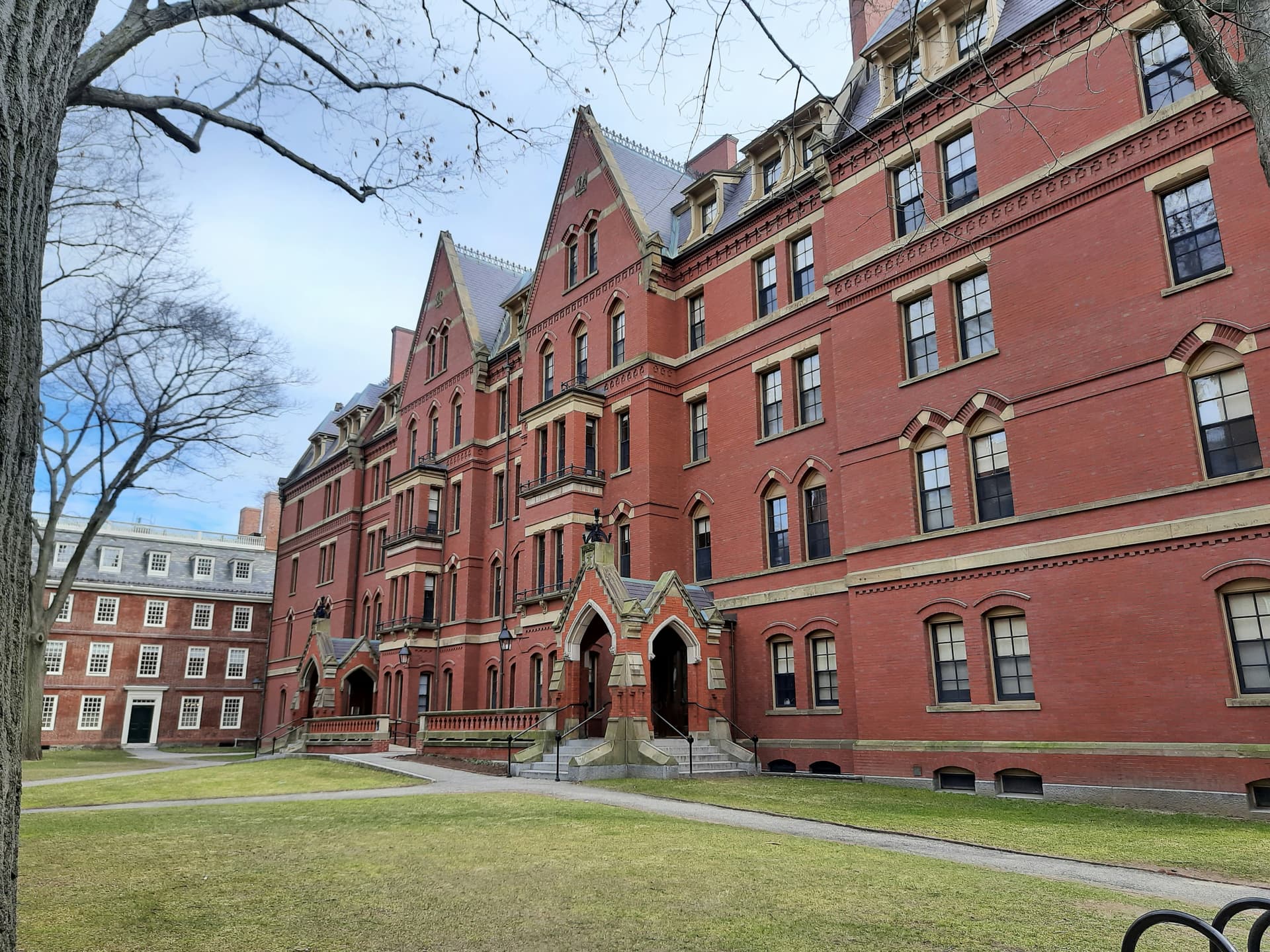
Harvard Summer School runs two programs for high school students: the Pre-College Program, a two-week, non-credit, residential session that costs $6,250 in 2027, and the Secondary School Program, a four- or seven-week program of for-credit college courses that costs $4,180 to $15,980 depending on format. Both use one application, which opens December 1, 2026, with an early deadline of January 13, 2027 and a regular deadline of February 10, 2027. Harvard calls both programs selective but does not publish an acceptance rate, and it states plainly that attending does not guarantee admission to Harvard College.
Every fact below comes from Harvard Summer School's own pages, plus one news report on how admissions offices view summer programs. All are linked in the Sources section. YRI Fellowship runs a different kind of program, a research mentorship, and we say that upfront. Where Harvard has not published a number, we say so.
What the two programs are
Harvard Summer School is run by Harvard's Division of Continuing Education. Its high school offerings split into two tracks that are easy to confuse.
The Pre-College Program is a two-week, on-campus session. Each student takes one non-credit course, chosen from nearly 30 offered each session, in areas such as creative writing, biology, psychology, government, economics, computer science and physics. Harvard says students are in class three hours a day with two to four hours of homework, in an average class of 15. Courses are not graded with letter grades. The program is residential only, and it adds required activities: academic exploration events, college readiness events and weekend social trips.
The Secondary School Program (SSP) is the for-credit option. Students take Harvard Summer School courses for college credit and earn a letter grade and a Harvard Summer School transcript. The seven-week session offers more than 200 courses, taken alongside college students and adult learners, and the four-week session offers about 20. Harvard estimates eight to twelve hours of work outside class per week for each four-credit course. SSP can be residential, commuting or online.
| Pre-College Program | Secondary School Program | |
|---|---|---|
| Length | 2 weeks | 4 or 7 weeks |
| Credit | None, no letter grades | Yes, letter grade and transcript |
| Courses | One course, nearly 30 to choose from | One course (4-week) or one or two (7-week) |
| Format | Residential only | Residential, commuting or online |
| Classmates | Pre-College students | College students and adults as well |
| 2027 cost | $6,250 | $4,180 to $15,980 |
For how these compare with other Ivy League summer options, see our guide to the best summer programs at Ivy League schools.
Eligibility for summer 2027
Harvard uses one age rule for both programs: students must be at least 16 by June 13, 2027, and must not turn 19 before July 31, 2027. Harvard says there are no exceptions, citing Massachusetts law and university policy.
- Pre-College: rising juniors and seniors who will graduate from high school and enter college in 2028 or 2029.
- Secondary School Program: students who will graduate and enter college in 2027, 2028 or 2029, so graduating seniors can also attend.
The student, not a parent or counselor, must create the account and complete the application. A student may apply to only one Harvard Summer School high school program per year, and ranks the formats in that one application. Homeschooled students may apply.
International students can attend both programs. Pre-College participants do not qualify for an F-1 visa and would use a B-2 tourist visa or ESTA. SSP residential and commuting students can receive I-20 sponsorship, but international SSP applicants who need a visa must apply by the February 10, 2027 deadline.
What it costs, and what aid exists
Harvard has posted 2027 prices for both programs. All applicants also pay a $75 non-refundable application fee, and Harvard does not offer fee waivers to individual students.
| Program and format | Credits | 2027 cost | Includes |
|---|---|---|---|
| Pre-College, any session | None | $6,250 | Tuition, room, meals, activities, accident and sickness insurance |
| SSP 4-week residential | 4 | $9,260 | Tuition, room, meal plan, program fee |
| SSP 7-week residential | 8 | $15,980 | Tuition, room, meal plan, program fee |
| SSP 4-week commuting or online | 4 | $4,180 | Tuition and program fee |
| SSP 7-week commuting or online | 4 or 8 | $4,180 or $8,160 | Tuition and program fee |
The SSP pieces break down as $3,980 per four-credit course, a $200 program fee, and room and meals of $5,080 for four weeks or $7,820 for seven. Seven-week residential students must take eight credits. Commuting is limited to students who live, or stay with an approved adult over 25, within commuting distance in Massachusetts, Maine, New Hampshire, Rhode Island, Connecticut or Vermont. Travel, books and supplies are extra for every format.
Financial aid. Both programs offer need-based scholarships, applied for inside the program application. Harvard says awards typically cover only a portion of the cost, so families should expect to pay the rest. Aid is limited to U.S. citizens, permanent residents and DACA recipients, which means international students pay full price. Harvard says more aid is available in the early round, and none is available to late applicants. Payment plans are not offered, although families can make several smaller payments before the deadline.
For how these prices sit against research programs and mentorships, see how much high school research programs cost.
Dates and deadlines for 2027
The application timeline is the same for both programs.
| Milestone | Date |
|---|---|
| Application opens | December 1, 2026 |
| Early application and priority financial aid deadline | January 13, 2027 |
| Early decisions released | February 17, 2027 |
| Regular application, financial aid and international SSP deadline | February 10, 2027 |
| Regular decisions released | March 10, 2027 |
| Late application deadline (no aid) | March 31, 2027, or earlier if waitlists fill |
All deadlines are 11:59 p.m. Eastern. Admitted early applicants must respond by March 3, 2027, and regular applicants by March 24, 2027.
Program dates for summer 2027:
| Session | Dates |
|---|---|
| Pre-College Session I | June 21 to July 2, 2027 |
| Pre-College Session II | July 12 to July 23, 2027 |
| Pre-College Session III | July 26 to August 6, 2027 |
| SSP 4-week Session I | June 14 to July 8, 2027 |
| SSP 4-week Session II | July 12 to August 5, 2027 |
| SSP 7-week | June 21 to August 6, 2027 |
Our 2027 summer research program deadlines post puts these dates next to the selective research programs, several of which close in the same January to March window.
What the application asks for
The application includes short essays, the $75 fee, a counselor report, transcripts from ninth grade through the current term (including fall 2026 grades), and a rules and media release signed by a parent. Students whose first language is not English submit TOEFL, IELTS or Duolingo scores. There is no minimum GPA, and PSAT, SAT and ACT scores are optional.
How selective it is
Harvard does not publish an acceptance rate for either program, and any percentage you see online is not from Harvard. What Harvard does say is that both programs are selective but designed to be more accessible than Harvard College admissions, and that review looks at academic interests, motivation, maturity and readiness rather than only grades or scores. For SSP, Harvard mentions a high volume of applications and says it takes into account schools that do not offer AP or advanced courses.
Our reading, which is opinion: a student with solid grades, a supportive counselor report and thoughtful essays who applies in the early round has a reasonable chance. Selectivity here is not in the same category as Harvard College or the free research programs such as RSI.
What students get out of it
Families should be clear about what they are buying.
- A college-level course with a Harvard instructor. Pre-College classes are small, averaging 15 students. SSP courses carry the same expectations as any Harvard Summer School course.
- Credit, for SSP only. SSP students leave with a letter grade and a Harvard Summer School transcript. Pre-College students receive an instructor evaluation, not a grade or credit.
- A test run of college life. Living in Harvard dorms, eating in the dining halls and managing a schedule away from home is the experience most students describe.
- College readiness programming. Essay workshops, financial aid seminars and panels with admissions officers from other colleges.
What neither program is designed to produce is original research, a paper, or a competition entry. That is not a flaw. They are courses, and they do what courses do.
How admissions officers weigh it, frankly
Harvard's own answer is careful. Its admissions FAQ says attending Pre-College or SSP does not guarantee admission to Harvard, and that doing well will strengthen an application to any college. Harvard also reports that 20 percent of respondents to a 2024 survey of its summer students went on to an Ivy League school. That figure describes who chooses to attend, a group that is already high-achieving, not what the program caused.
Admissions offices outside Harvard have been more direct. In a 2015 Washington Monthly report, Brown's dean of admission, Jim Miller, said Brown gives its own pre-college program "zero" weight, and a former Penn admissions reader said she did not place much value on these programs when reading files. Stanford's dean of admission said in 2018 that Stanford treats its own summer programs as an extracurricular activity, with no advantage in review. That is the common view: a summer course is worth listing, worth writing about if it changed what the student wants to study, but not a distinguishing credential on its own. A grade from SSP adds one more data point on academic readiness, which matters most for a student whose school offers few advanced courses.
Opinion: for many families, the value of Harvard Pre-College is the experience, a first taste of independence, a subject the student loves, and a clearer picture of college. That is a fine reason to go, as long as the family is not paying for an admissions boost it is unlikely to deliver. Our guide on what Harvard admits look like covers what does show up in successful applications.
What admissions officers weigh more
Readers at selective colleges see thousands of applications listing summer courses at well-known universities. What stands out is a finished result that someone outside the student's family can check: a first-author research paper accepted at a peer-reviewed venue, a placement at a regional or state science fair, an ISEF or JSHS run, or a project that a mentor can describe in a letter. Those show what the student did with an idea over months, not where they sat for two weeks.
That is the gap the YRI Fellowship is built to fill. It is 10 weeks, one-on-one with a PhD mentor matched to the student's field, and it ends with the student as first author on a paper submitted to a peer-reviewed IEEE, Springer or Elsevier venue. ISEF and JSHS preparation is included, the mentor writes a letter of recommendation, and mentorship continues at no extra cost until the paper is published. 87% of Fellows publish, 73% place at competitions, and Fellows have been admitted to Harvard, Stanford, Caltech, Johns Hopkins and Brown.
The cost is $2,997, with a three-month payment plan and scholarships considered case by case. Admissions are rolling, so a student can start before or after a Harvard summer session. Some families do both: Harvard for the campus experience, YRI for the result that goes on the application. If you are deciding how to spend a summer, our comparison of YRI and summer programs and our post on why students waste summers lay out the trade-off. For why research carries weight with readers, see how research papers help with Ivy League admissions.
Download the YRI Fellowship brochure
The program, the outcomes, the mentors and the tuition, in one PDF you can read with your family.
Related guides
- Best summer programs at Ivy League schools
- What Harvard admits look like
- Why GPA alone will not get you into Harvard
- Summer research program deadlines for 2027
- YRI vs summer programs
- Research programs for high school students in Massachusetts
- Are pre-college programs worth it?
- Yale Young Global Scholars guide
Frequently Asked Questions
How much does Harvard Pre-College cost in 2027?
$6,250 per two-week session, covering tuition, room, meals, activities and insurance, plus a $75 non-refundable application fee. The Secondary School Program costs $4,180 to $15,980 depending on length, format and credits.
What is the Harvard Pre-College acceptance rate?
Harvard does not publish one for the Pre-College Program or the Secondary School Program. Harvard describes both as selective but more accessible than Harvard College admissions.
Does Harvard Pre-College give college credit?
No. The Pre-College Program is non-credit and has no letter grades. The Secondary School Program does give credit, with a letter grade and a Harvard Summer School transcript.
What is the Harvard pre-college application deadline for 2027?
The application opens December 1, 2026. The early and priority financial aid deadline is January 13, 2027, the regular deadline is February 10, 2027, and the late deadline is March 31, 2027, with no financial aid for late applicants.
Who is eligible for Harvard Summer School as a high school student?
Students who are at least 16 by June 13, 2027 and will not turn 19 before July 31, 2027. Pre-College is for the classes of 2028 and 2029. The Secondary School Program is for the classes of 2027, 2028 and 2029.
Does attending Harvard Summer School help you get into Harvard?
Harvard says attending does not guarantee admission to Harvard College, though doing well can strengthen an application anywhere. Admissions readers generally treat it as an extracurricular rather than a distinguishing credential.
Is Harvard Pre-College worth it?
It is worth it if the goal is a two-week taste of college life and a subject the student loves, and the family is comfortable with the price. It is not designed to produce research, a paper or a competition result, which are what selective admissions readers tend to weigh more.
What is a good alternative to Harvard Pre-College for college applications?
If the goal is a credential admissions readers can verify, the YRI Fellowship pairs students one-on-one with a PhD mentor for 10 weeks and ends with a first-author paper submitted to a peer-reviewed IEEE, Springer or Elsevier venue, with ISEF and JSHS preparation included, for $2,997.
Sources
- Harvard Summer School: High School Programs (overview of Pre-College and Secondary School Program)
- Harvard Summer School: Pre-College Program (2027 cost, session dates, deadlines, eligibility, class size, credit, admissions FAQs)
- Harvard Summer School: Pre-College 2027 Cost and Aid (fee breakdown, aid eligibility, no payment plans, no fee waivers)
- Harvard Summer School: Secondary School Program (2027 dates, formats, course counts, eligibility, credit, workload)
- Harvard Summer School: Secondary School Program 2027 Cost and Aid (tuition, program fee, room and meals)
- Harvard Summer School: Secondary School Program Options (residential, commuting and online details)
- Harvard Summer School: Program Admissions (eligibility, application materials, selection process, visas, admission to Harvard FAQ)
- Harvard Summer School: Program Calendars (2027 application deadlines, decision and response dates)
- Stanford Daily: High school program participants reflect on the value of Stanford's summer programming (dean of admission on how summer programs are weighed)
- Washington Monthly: Are elite college summer programs worth the price? (Brown dean of admission and former Penn reader on admissions weight)