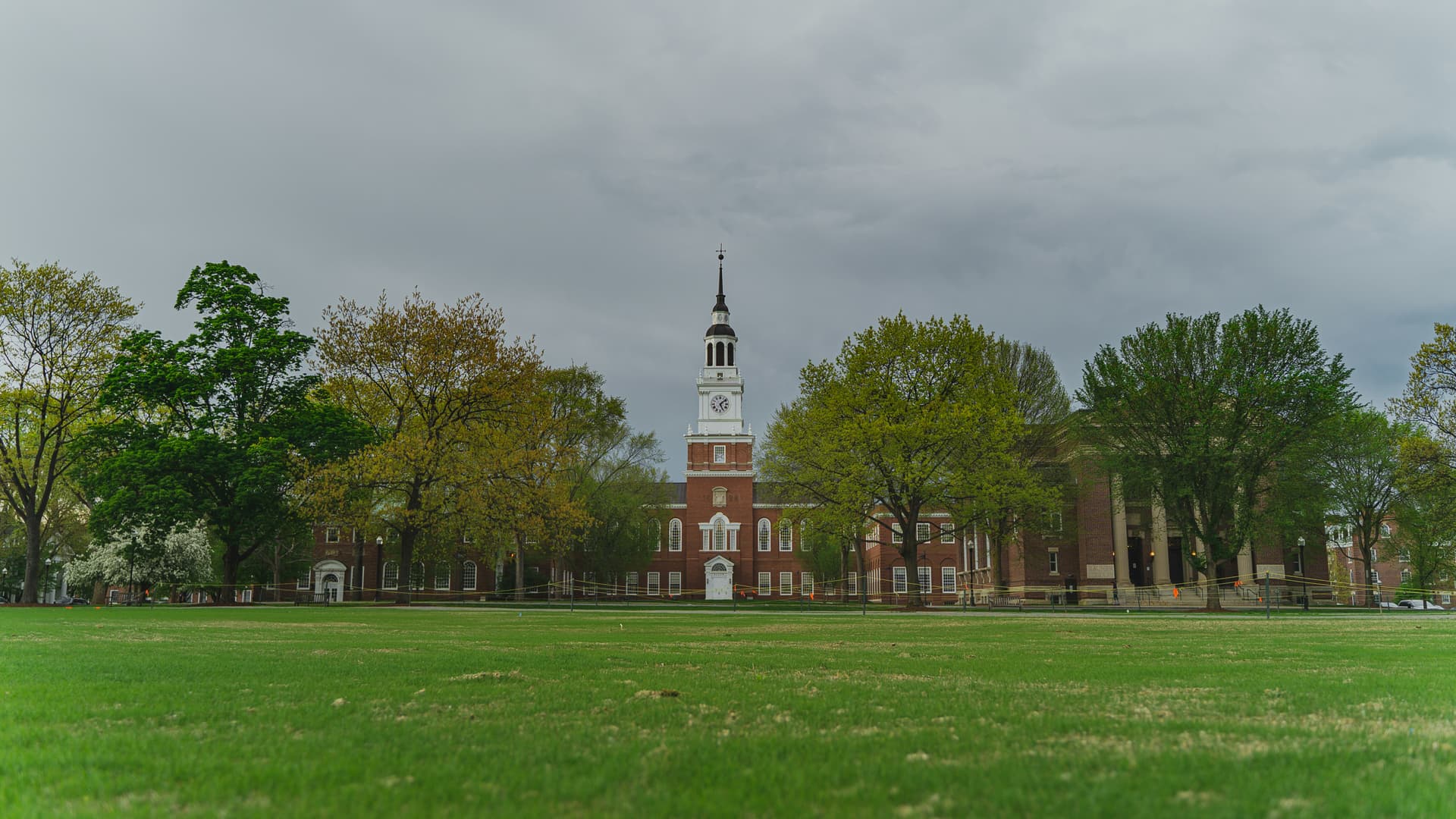
Yale Young Global Scholars (YYGS) is a two-week residential summer program on Yale's campus for current high school sophomores and juniors aged 16 to 18, with tuition of $7,500 and need-based aid of up to 100% of tuition for both U.S. and international students. Yale reports more than 14,000 applications for summer 2026 and nearly 2,000 participants a year, and it does not publish an acceptance rate. For summer 2027, the Early Action deadline has passed; the Regular Decision deadline is January 6, 2027.
Facts below come from the official YYGS website and 2027 sample application, plus one third-party estimate, all linked in Sources. Where Yale has not published a number, we say so.
What YYGS is
YYGS began in 2001 under the name "Ivy Scholars" and took its current name in 2012. It is run by Yale's Office of International Affairs, not by Yale's undergraduate admissions office. It now runs nine sessions with nearly 2,000 students from more than 150 countries, about 200 per session, at a 12 to 1 student to teacher ratio.
Each session is two weeks. Students live in Yale dormitories at Benjamin Franklin College and Pauli Murray College, eat in Yale dining halls, and follow a full daily schedule. The academic program includes:
- Lectures from Yale faculty and practitioners.
- Seminars, chosen from more than 150 offered each summer.
- A Capstone Project, a collaborative group project presented at the end of the session.
- Breakout discussions, a symposium and college experience panels.
- An optional admissions panel hosted by Yale Admissions.
There are no grades and no course credit. Students receive an electronic certificate of completion.
The three academic tracks
Students attend one session and one track, but they rank their preferences for all three tracks and all three session dates on the application.
| Track | Focus |
|---|---|
| Innovations in Science and Technology (IST) | STEM topics from physics and chemistry to neuroscience, immunology, psychology and engineering |
| Politics, Law and Economics (PLE) | Economic theory, government, legal frameworks, public policy and international relations |
| Solving Global Challenges (SGC) | Public health, poverty, gender equality and sustainability, framed around the UN Sustainable Development Goals |
IST is a survey of many science fields rather than lab work in one. For hands-on research, compare our guide to free research programs for high school students.
Who is eligible for YYGS 2027
Yale lists five requirements and says no exceptions are made to the age rule:
YYGS accepts applications from every country. One point families miss: a sophomore who will still be 15 on July 18, 2027 is not eligible, even though sophomores in general are.
What YYGS costs, and how the aid works
| Item | Detail |
|---|---|
| Tuition | $7,500 for one two-week residential session |
| What tuition covers | Housing, meals, curriculum materials and other on-campus components |
| Not covered | Travel to and from New Haven |
| Application fee | $85 for Early Action, $100 for Regular Decision, non-refundable |
| Fee waiver | Available for students with financial need who complete the financial aid section |
| Refunds | Tuition is non-refundable except in extreme documented cases such as a visa denial or a family medical emergency |
Need-based aid is a tuition discount of up to 100%, offered equally to U.S. and international students, which few pre-college programs do. Yale's figures:
- In 2026, YYGS met 99% of aid requests in full for admitted students who applied for aid.
- About one-third of admitted students for 2026 were offered need-based aid, and the average award covered more than 80% of tuition.
- YYGS distributed more than $3 million in need-based aid for 2026, including more than 30 scholarships that covered full tuition and travel.
There is no separate aid form. Aid is requested inside the application, and a student who declines to request it cannot ask later. The named scholarships for 2027 (New Haven Public Schools, STARS for rural and small-town U.S. students, YYAS alumni, and Young Leaders) require a complete application, including the aid section, by January 6, 2027.
For how YYGS compares on price with other summer options, see how much research programs cost.
Dates and deadlines for 2027
| Milestone | Date |
|---|---|
| Early Action deadline | October 15, 2026 (passed) |
| Early Action decisions | By December 11, 2026 |
| Regular Decision deadline | January 6, 2027, 11:59 pm ET |
| Scholarship consideration deadline | January 6, 2027, complete application with aid section |
| Regular Decision results | By March 10, 2027 |
| Deadline to accept and pay tuition | March 15, 2027 for Regular Decision admits |
| Session I | June 20 to July 2, 2027 |
| Session II | July 4 to July 16, 2027 |
| Session III | July 18 to July 30, 2027 |
Applications are read on a rolling basis, but no decisions go out until the whole pool has been reviewed. Put YYGS on the same calendar as your other options with our 2027 summer research program deadlines.
The YYGS acceptance rate
Yale does not publish an acceptance rate. It does publish the two numbers that bound it. YYGS received more than 14,000 applications for summer 2026, and the program enrolls nearly 2,000 students a year. That means roughly one in seven applicants attends. The admission rate is somewhat higher than that, because some admitted students decline or cannot obtain a visa.
Pioneer Academics, a third-party program, reports an admission rate of about 15%, based on 2025 application numbers, and a range of 15 to 20% in its body text. Treat any figure as an estimate. What is certain from Yale's numbers is that YYGS is far more selective than most pre-college programs, which admit most students who can pay.
What the application asks for
YYGS reviews applications holistically, and it says the essays and short answers are important parts of the file. Based on the official components page and the 2027 sample application:
- Activities list. One activity that is most meaningful to you, with a 100-word explanation of why, plus up to two more.
- Awards. Optional, up to five, with the level of recognition (school, regional, national).
- One essay of 300 to 400 words. The 2027 prompt asks about a time you were pushed outside your comfort zone and it did not go as planned, and what you learned.
- One short answer of 150 to 200 words about something that has influenced and shaped you.
- Two "fast take" answers of 280 characters each, designed to be creative.
- Session and track ranking, with 100-word explanations for your track choices, your date availability and why YYGS specifically.
- Transcripts for courses from age 14 onward, official or unofficial.
- One recommender, who fills in the online YYGS form. Written letters are not accepted, and parents, relatives, family friends and paid tutors or counselors cannot recommend.
- Optional English fluency scores and the optional financial aid section.
How to be competitive
Yale does not publish what it weighs beyond "holistic," so what follows is our reading of the application, and it is opinion.
- Make the essay specific. A small, honest story with a clear lesson beats an impressive one. Yale says the reflection does not need to be positive.
- Use the 100-word answers. Generic answers about track, dates and why YYGS waste three chances to show fit.
- Pick one meaningful activity and explain it. The list has room for only three activities, so depth beats breadth. A student who has started a research project or a science fair entry has a concrete answer. Our guide on how to build a college application spike applies directly.
- Choose a recommender who has known you longest. YYGS says that makes the best recommendation.
- Apply for aid if you have any need. There is no second chance to request it.
Is YYGS worth it
For many students, yes. Opinion follows, based on Yale's own description.
YYGS is strong at what it is designed to do. It puts a student among peers from more than 150 countries, gives a preview of university life and lectures from Yale faculty, and its aid policy means cost does not decide who attends. Yale also says, to its credit, that YYGS is not a feeder program for Yale and was not founded to generate revenue.
What it is not designed to be is a research program. Two weeks, no grades, no credit and a group Capstone are a good introduction to many subjects, not a finished piece of independent work. Families should choose it for the experience and the community, and not expect the certificate alone to carry an application.
The odds, frankly
With the Early Action deadline behind us, every remaining 2027 applicant competes in the Regular Decision pool, alongside Early Action applicants who were deferred. Roughly one in seven applicants attends, and the class is spread across nine sessions, so ranking all three dates and all three tracks gives the strongest chance. Asking for aid does not hurt: Yale says it considers financial need separately from eligibility.
It is still a single decision in March, so the year's plan should not depend on it.
What admissions officers weigh more
Admissions offices at selective colleges look for evidence of what a student did with an interest over time. Short programs, even excellent and selective ones like YYGS, show curiosity and initiative. Sustained, independent work that ends in a result shows something different: that the student can take a question, work on it for months, and finish.
MIT Admissions makes the same point from the other side. Its summer guidance says there are no right or wrong ways to spend a summer, and that most summer programs admit all or most students who can pay. In our view, what separates an application is the student's own work, which is why research with a published paper or a science fair result carries weight across selective admissions. We explain why in how research papers help with Ivy League admissions and what Yale looks for in research.
This is not a choice between YYGS and research. A student can attend for two weeks in July and spend the rest of the year on an original project. The YRI Fellowship is built for that project. It is 10 weeks, one-on-one with a PhD mentor matched to the student's field, and it ends with the student as first author on a paper submitted to a peer-reviewed IEEE, Springer or Elsevier venue. ISEF and JSHS preparation is included, the mentor writes a letter of recommendation, and mentorship continues at no extra cost until the paper is published.
87% of Fellows publish, 73% place at competitions, and Fellows have been admitted to Brown, Johns Hopkins, Stanford, Caltech and Harvard. It costs $2,997, with a three-month payment plan and scholarships case by case. Admissions are rolling and the program is online, so a student can start this winter, before YYGS decisions arrive.
Download the YRI Fellowship brochure
The program, the outcomes, the mentors and the tuition, in one PDF you can read with your family.
Related guides
- Best summer programs for Ivy League admissions
- Are pre-college programs worth it
- YRI vs summer programs, compared
- Free research programs for high school students
- Summer research program deadlines for 2027
- The extracurricular that matters
Frequently Asked Questions
What is the YYGS acceptance rate?
Yale does not publish one. With more than 14,000 applications for 2026 and nearly 2,000 participants a year, roughly one in seven applicants attends. Pioneer Academics estimates about 15%.
How much does YYGS cost in 2027?
Tuition is $7,500 for one two-week residential session, covering housing, meals and on-campus components. Travel is not included. The application fee is $85 for Early Action or $100 for Regular Decision, with waivers for students with financial need.
Does YYGS offer financial aid?
Yes. Need-based aid covers up to 100% of tuition and is offered equally to U.S. and international students. In 2026, YYGS met 99% of admitted students' aid requests in full, and the average award covered more than 80% of tuition.
When is the YYGS 2027 deadline?
The Early Action deadline was October 15, 2026. The Regular Decision deadline is January 6, 2027 at 11:59 pm ET, with decisions by March 10, 2027. Scholarship consideration also requires a complete application by January 6.
Who is eligible for YYGS?
Current sophomores and juniors, or the international equivalent, who are 16 to 18 by July 18, 2027, graduate in 2028 or 2029 (Northern Hemisphere) and have not attended before. Every country is eligible.
Does YYGS help you get into Yale?
Yale says YYGS is not a feeder program for Yale. It calls the certificate a credential for an application to any college, but does not say attendance improves admission chances.
Is YYGS worth it?
For a global peer group and a preview of university life, especially with aid, it is a strong program. It is two weeks with no grades or credit, so it works best alongside sustained work of the student's own.
What should a student do alongside YYGS to stand out?
Build one sustained piece of work with a finished result. The YRI Fellowship pairs students with a PhD mentor for 10 weeks and ends in a first-author paper submitted to a peer-reviewed venue, with ISEF and JSHS preparation included. It is online with rolling admissions, so it fits around a two-week summer session.
Sources
- Yale Young Global Scholars: Tuition and Aid ($7,500 tuition, what it covers, refunds, payment deadlines)
- Yale Young Global Scholars: Need-Based Financial Aid (up to 100%, 99% of requests met in 2026, $3 million)
- Yale Young Global Scholars: Scholarships (2027 named scholarships, January 6, 2027 requirement)
- Yale Young Global Scholars: Application Dates and Deadlines (Early Action and Regular Decision 2026 to 2027)
- Yale Young Global Scholars: Session Offerings and Dates (three sessions, three tracks)
- Yale Young Global Scholars: Eligibility (2027 age, grade, graduation date rules)
- Yale Young Global Scholars: Required Components (essays, fast takes, recommender, fees, fee waiver)
- Yale Young Global Scholars: 2027 Sample Application (PDF: essay prompts, word limits, activities, 2027 session dates)
- Yale Young Global Scholars: Academics (lectures, seminars, Capstone, no grades or credit)
- Yale Young Global Scholars: Residential Life (dormitories, schedule, admissions panel)
- Yale Young Global Scholars: Innovations in Science and Technology track
- Yale Young Global Scholars: Politics, Law and Economics track
- Yale Young Global Scholars: Solving Global Challenges track
- Yale Young Global Scholars: History (2001 founding, size, ratio, applications)
- Yale Young Global Scholars: Common Questions (not a feeder for Yale, recommenders)
- Yale Young Global Scholars: 14,000+ applications for Summer 2026 (aid share, average award, scholarships)
- MIT Admissions: Summer programs (no right or wrong summers, most programs admit those who can pay)
- Pioneer Academics: YYGS guide (reported admission rate estimate)