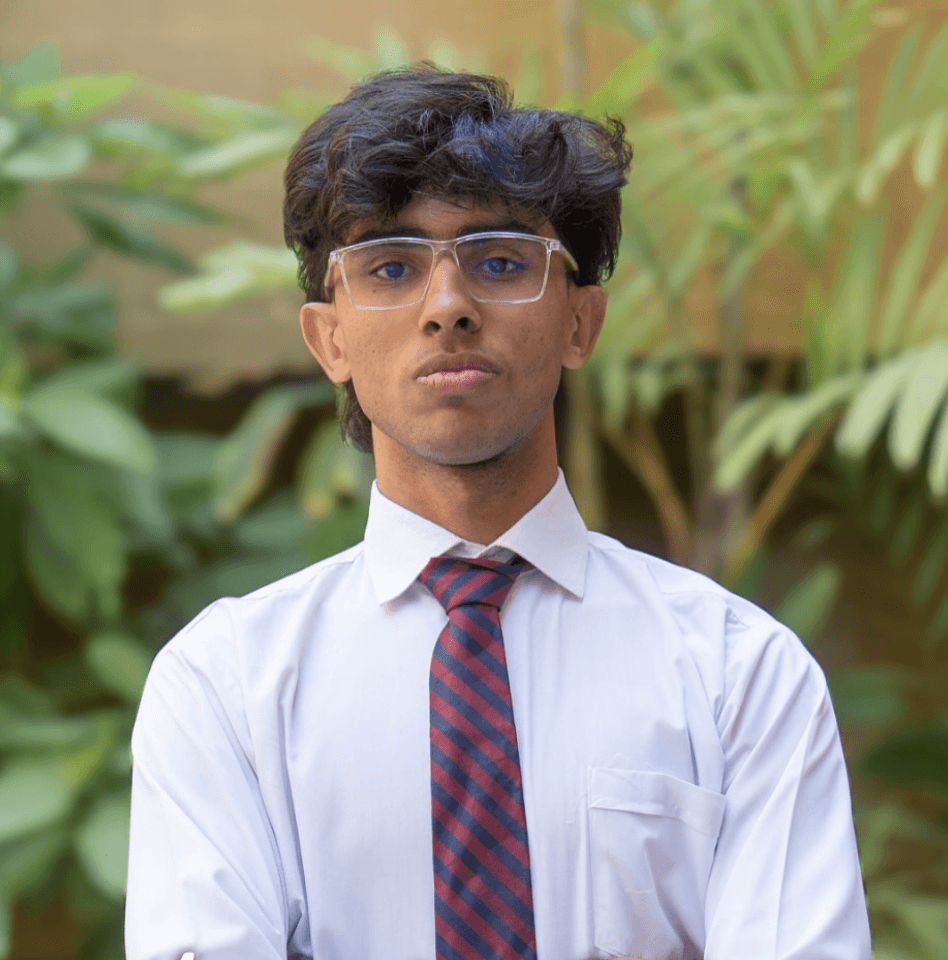
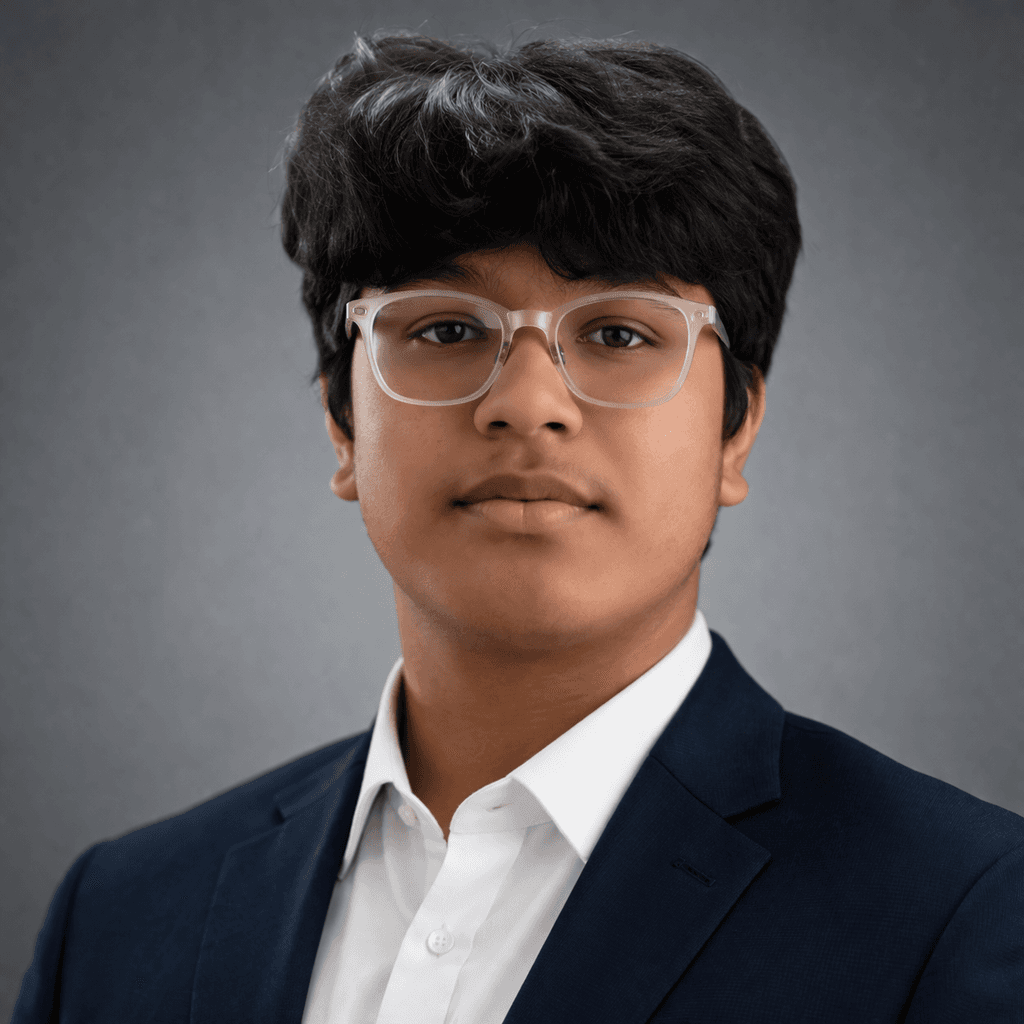
Yes. The YRI Fellowship accepts curious students from middle school up, and no research experience, perfect grades or research idea is needed to apply. Younger Fellows have already shown what an early start can do: Devansh Gupta became a first author at an IEEE conference at 14, and several Fellows who started in 9th grade have papers accepted at IEEE conferences.
If you are the parent of a 7th or 8th grader who keeps asking big questions, or a student who wants to start research before high school gets busy, this guide covers who YRI is for, what younger Fellows have achieved, what the 10 weeks ask of a student, and how to apply.
For a broader introduction, start with What Is YRI? and the Research Fellowship page.
Who the YRI Fellowship is for
YRI describes its students simply: curious students from middle school up, in any field from machine learning to the humanities. The application form includes middle school grades, so a younger student applies through the same 10-minute form as everyone else.
Three things are not required:
- Research experience. Most Fellows start with none at all.
- A perfect GPA or test scores. The program looks for curiosity and commitment, not a transcript.
- A research idea. The PhD mentor helps the student find the question. The first two weeks are spent with the mentor finding the right question, not reading a textbook.
What a younger student does need is curiosity and 5 to 8 hours a week, including the weekly 1:1 session with their mentor. Sessions are set around school, so the work fits into a normal term.
What younger YRI Fellows have achieved
The best way to judge whether an early start works is to look at students who did it. Every result below comes from the YRI Student Stories, and every published paper can be checked at the publisher.
Devansh Gupta: first-author IEEE paper at 14
Devansh joined as a 9th grader at The Doon School. He was a published poet in the Times of India with some Python experience, but he had never published research.
With his PhD mentor, he built a framework that looks at instability patterns in ECG heart signals as an objective marker for Major Depressive Disorder, a condition affecting more than 280 million people. The work connected cardiology, neuroscience, immunology and machine learning. He became a first author at an IEEE conference at 14 years old, one of the youngest first authors there. He has since launched a health-AI venture that scaled to 7 figures. Read Devansh's story.
Suriya Dev Saravanakumar: IEEE EMBC as a 9th grader
Suriya was a 9th grader at Doha College in Qatar. He was comfortable with code but had no research, mentorship or science fair experience.
He built a machine learning model that studies eye movements, such as how long the eye rests on a point and how often a person blinks, to separate Alzheimer's patients from healthy people. The paper was accepted at IEEE EMBC 2026 in Toronto, the annual conference of the IEEE Engineering in Medicine and Biology Society. Read Suriya's story.
Aarav Brahmbhatt: published in IEEE Xplore as a 9th grader
Aarav was a 9th grader at The Wardlaw-Hartridge School with an interest in AI and no research experience. He built an AI system that looks at a single photo of a traffic scene and predicts the chance of an accident, the expected waiting time and the CO2 emissions. The paper was published in IEEE Xplore through an international conference in Indore, India. Read Aarav's story.
Sai Tarekar: from zero coding to an IEEE acceptance
Sai started as a 9th grader at Woodstock School with zero research experience, zero coding experience and no science fair background. He rated his own coding a 1 out of 5.
He designed a system to clean the Yamuna River in Delhi, using small treatment units placed directly at pollution hotspots and machine learning to analyze water quality. The paper was accepted at IEEE ICSCSS 2026. Read Sai's story.
Avyay G.: first place at a regional science fair
Avyay was a 9th grader interested in AI and health with no research experience. He built an AI model that predicts how quickly respiratory disease develops based on air pollution and a person's genes. He won 1st place in his category at the Twin Cities Regional Science Fairs in March 2026, won 4 ribbons and qualified for the state science fair. Read Avyay's story.
More Fellows who started in 9th grade
| Fellow | What they researched | Result |
|---|---|---|
| Ansh Kumar | AI for Parkinson's research and lung cancer detection | Published at MIT URTC, IEEE accepted, nominated for the Rashtriya Bal Puraskar |
| Akul Nehra | Private, fair AI for judging financial risk | Full paper accepted at IEEE RCSM 2025, at 15 |
| Rishik Asati | Stopping AI assistants from leaking private data | IEEE conference acceptance, semi-finalist in the International STEM Research Challenge 2026 from 850 applicants |
| Krishik Singh | Predicting satellite collision risk before it escalates | IEEE conference acceptance |
| Melissa Nnam | An explainable tool that screens for anemia from a blood test | IEEE conference acceptance |
| Neil Voore | AI that spots nail diseases, and why test methods can inflate accuracy | Elsevier journal submission, plus a second paper accepted at an IEEE conference |
The pattern is clear. None of these students arrived as experienced researchers. They arrived curious, were matched with a PhD mentor, and did the work.
Why starting younger helps
A student who finishes a published paper early has something most applicants never get: time to build on it.
Time for the science fair season. The same research can go to regional fairs, JSHS and the ISEF track. YRI includes ISEF, JSHS and regional fair preparation, with judge questions rehearsed. Avyay's first place came in 9th grade, which leaves years of fair seasons ahead.
Time for a second project. Several Fellows have gone on to more than one paper. Neil has an Elsevier submission and a second IEEE paper. Ayaan Rustagi, who joined in 10th grade, has a published IEEE paper, a second paper accepted at an IEEE conference and a 3rd place science fair award.
Time to build a full profile. Fellowship alumni can apply to the Top 1% Profile, YRI's program built for Ivy League admissions, and they often do. A published paper is the strongest possible opening for it. Devansh's path, from a first IEEE paper at 14 to a health-AI company, shows how far that can go.
A story they can tell. Ten weeks of 1:1 work means a student can explain every line of their research in an essay or an interview. Starting younger means that story has years to grow.
For more on timing, see why starting research junior year can be too late and our guide to research programs for 9th graders.
Is a younger student ready for 10 weeks of research?
Parents often ask whether a 13 or 14 year old can keep up. Here is what the work involves and how YRI supports it.
No coding background needed
Coding helps in many fields, but it is not a requirement. Ryan Vo joined as a 10th grader with no research or programming experience, learned Python and built a full machine learning pipeline for skin graft design that was accepted at an IEEE conference. Sai Tarekar did the same from a 1 out of 5 in coding.
The mentor sets the pace
Every Fellow gets their own PhD mentor, with unlimited 1:1 sessions every week. The mentor helps the student come up with the idea, then walks them through every step of the research. Mentors are matched by field, so a student who loves space, medicine or robots works with a PhD in that area.
A team behind every paper
A younger student is not left to write alone. Our writing team edits every draft with the student until the paper is ready. Our publishing team picks the venue and handles the journal or conference process, with submissions to IEEE, Springer and Elsevier. If the journal asks for changes, the mentor keeps helping, free, until the paper is published.
Parents stay in the loop
Parents receive a summary after each weekly 1:1, and sessions are scheduled around school and activities. You see progress every week without having to manage it.
What the 10 weeks look like
Here is the path every Fellow follows, whatever their grade:
87% of Fellows publish, and 73% place at competitions. See the Published Work page for papers Fellows have published, each linked to the publisher's own index.
A first step for 8th graders: the free YRI competition
If your child is in 8th grade and wants a low-pressure way to try research thinking, the YRI Global Research Proposal Competition 2027 is a good start. The official rules open it worldwide to students in grade 8 to grade 12, or the equivalent. It is free, any subject is allowed, and the deadline is January 10, 2027.
Students write a proposal of up to 1,000 words explaining a question and how they would investigate it. No results and no lab are needed. First place wins a full scholarship to the YRI Fellowship, valued at $2,997. Read our complete competition guide for details.
What the YRI Fellowship costs
The Research Fellowship is $2,997, or 3 payments of $999. Everything is included: unlimited 1:1 sessions with a PhD mentor, editing, submission, a letter of recommendation from the mentor and free help until the paper is published. There are no hidden fees.
Applying is free, and you only pay after your child is accepted and you decide to go ahead. Scholarships are decided case by case, so if cost is a concern, tell us. See Tuition for both programs side by side.
How to apply
Admissions are rolling, so there is no single deadline. Our step-by-step guide to applying covers what to prepare. You can also read how YRI matches mentors and the YRI success rate.
Start early, finish published
A curious 13 or 14 year old does not need to wait for junior year to do serious research. Fellows who started in 9th grade have published at IEEE, won first place at science fairs and been accepted at international conferences. The YRI Fellowship gives younger students the same PhD mentor, editing team and publishing team as everyone else, with free help until the paper is published.
See the YRI Fellowship and apply in 10 minutes
Sources
- What Is YRI?: who YRI is for, cost, legitimacy
- The Research Fellowship: program steps, time per week, decision time
- Tuition: pricing, payment plans, scholarships
- Student Stories: grades and results for each Fellow named above
- Published Work: published papers and venues
- The Top 1% Profile: Fellowship alumni applying
- YRI Global Research Proposal Competition 2027: eligibility, prizes and deadline